3D-printed organs: are we on the brink of a transplant revolution?

For patients awaiting organ transplants, time can be the difference between life and death. Across the world, demand for donor organs far outstrips supply, leaving thousands on waiting lists and many never receiving the treatment they need. Against this backdrop, researchers are looking to an unlikely source of hope: 3D printing. Once associated mainly with manufacturing and design, 3D printing technologies are now being adapted to create living tissues and, one day, potentially entire organs. The vision is bold but increasingly within reach – offering the possibility of a future where no patient dies waiting for a transplant.

The promise of bioprinting

At the heart of this field is bioprinting, a technique that uses 3D printers to layer living cells, biomaterials and growth factors into structures that mimic natural tissue. These bio-inks can be precisely deposited to replicate the complex architecture of human organs.

Already, researchers have successfully bioprinted simple tissues such as skin, cartilage and bone, which are being trialled for use in reconstructive surgery. More complex structures, such as blood vessels and heart tissue, are in active development. The ultimate goal is to print fully functional organs such as kidneys, livers and hearts – an achievement that would transform transplantation medicine.

Addressing the transplant shortage

The impact of 3D-printed organs would be profound. In the UK alone, thousands of patients are currently on transplant waiting lists, with demand consistently outpacing supply. Even when organs become available, the risk of rejection remains high, requiring recipients to take lifelong immunosuppressants.

Bioprinting could help in two crucial ways. First, it would expand the supply of transplantable organs, reducing waiting times and saving lives. Second, because these organs could be made using a patient’s own cells, the risk of rejection could be dramatically reduced. This combination of availability and compatibility would mark a revolution in transplant medicine.

Research progress so far

While fully functional organs remain some way off, progress is accelerating. Laboratories have already printed miniature versions of organs, sometimes called “organoids” or “mini-organs”. These are not yet suitable for transplantation but are proving invaluable in research.

For example, mini-livers and mini-kidneys are being used to test new drugs, providing more accurate models of human biology than animal testing. Similarly, printed patches of heart tissue have been shown to contract like natural muscle, pointing towards future therapies for heart failure.

These milestones show both the potential of the technology and the complexity of the challenge. Organs are not just collections of cells; they rely on intricate networks of blood vessels, nerves and supporting structures. Reproducing this complexity at scale remains one of the biggest hurdles.

Beyond transplantation: new frontiers in medicine

Even before full organs become possible, bioprinting is already opening new opportunities in medicine. Customised implants, such as patient-specific bone grafts or ear cartilage, are already being developed. These tailored solutions improve outcomes by matching the patient’s anatomy precisely.

Another promising avenue is regenerative medicine. By printing tissues that encourage the body’s own healing processes, bioprinting could help repair damage from injury or disease. For instance, printed skin grafts for burn victims could speed up recovery and reduce complications.

The technology is also advancing personalised medicine. By printing tissues derived from a patient’s own cells, doctors can test how different drugs will work before prescribing them, reducing trial-and-error in treatment.

Challenges to overcome

Despite the promise, several challenges remain before 3D-printed organs become a clinical reality. Technical obstacles include ensuring that printed tissues can survive long-term in the body, establishing blood supply, and scaling up production from small patches to whole organs.

Regulation will also be critical. As with any medical innovation, patient safety must come first. Clear standards will be needed to assess the quality, reliability and long-term performance of bioprinted organs. Ethical questions around access and equity will also need attention. If the technology proves expensive, how can healthcare systems ensure fair access?

The UK’s role in bioprinting innovation

The UK is well placed to contribute to this emerging field. Universities and research centres are at the forefront of bioprinting research, while the NHS provides a unique environment for clinical trials and adoption. By combining life sciences expertise with engineering and materials science, the UK is building capacity across the full innovation pipeline.

Government strategies emphasising innovation in health technology, combined with investment from industry and research councils, are helping to accelerate progress. As the technology matures, the UK could play a leading role in moving bioprinting from the lab into clinical practice.

Looking ahead

The dream of 3D-printed organs is ambitious, but it is no longer a distant fantasy. With rapid advances in bioprinting techniques, cell science and biomaterials, the building blocks are falling into place. Even if fully functional organs remain years away, the progress being made in tissue printing, regenerative medicine and drug testing is already reshaping healthcare.

If successful, the impact would be extraordinary: ending transplant waiting lists, reducing rejection rates and opening new horizons for personalised medicine. For patients facing the uncertainty of life on a waiting list, 3D printing offers a glimpse of a future where hope is no longer in short supply.

Conclusion

3D-printed organs represent one of the most radical possibilities of modern life sciences. By uniting biology, engineering and medicine, researchers are inching closer to a world where donor shortages are overcome and treatments are tailored to each individual.

For the UK, with its strong research base and commitment to innovation, the opportunity is not only to lead this revolution but to ensure it delivers real benefits to patients. The journey is far from complete, but the direction is clear: small steps today could lead to lifesaving breakthroughs tomorrow.

Author

Leave A Comment

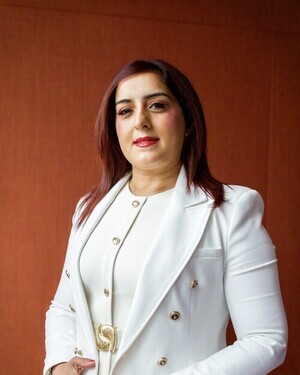
Shabna Raja

Advisory Partner,
Life Sciences Week
+44 (0) 121 227 4156
info@lifesciencesweek.co.uk

Bio

Shabna Raja is a senior leader in enterprise transformation within Life Sciences, with over 20 years’ experience spanning pharma, consumer health and large-scale digital programmes.

She specialises in bridging strategy and execution – helping organisations translate AI, data and digital innovation into tangible business outcomes. Her work focuses on complex transformation
initiatives across commercial, data and operating model domains within regulated environments.

Shabna spent seven years at GSK, where she played a key role in transformation programmes, including as part of the Consumer Health joint venture with Pfizer — one of the most significant integrations in the sector. This experience provided her with deep expertise in  organisational change, integration and operating model evolution at global scale.

More recently, she has spent over three years working closely with Haleon through a strategic
services partnership, leading enterprise client engagement and managing a multi-million-pound account while supporting transformation across a newly independent global organisation.

Her experience spans the end-to-end life sciences value chain, including R&D, commercial, supply chain and patient engagement, giving her a holistic perspective on how technology and transformation can unlock value across the industry.

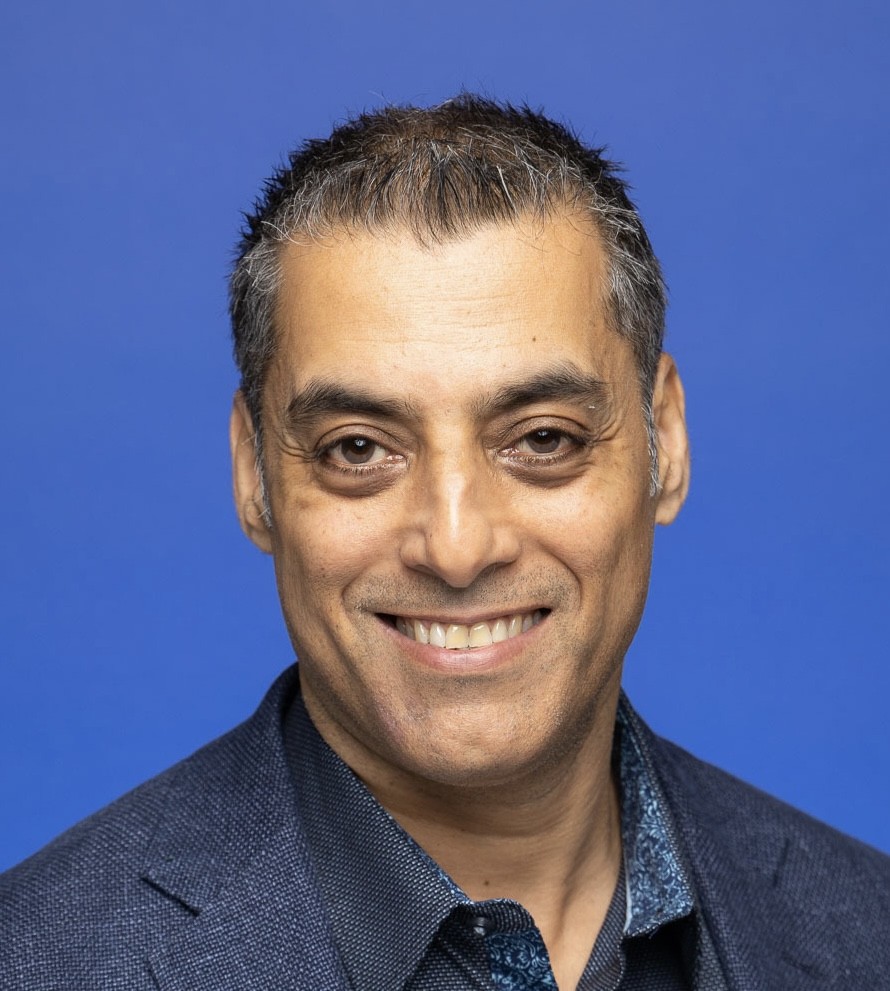
Amjad Khan

Executive Partner,
Life Sciences Week
+44 (0) 121 227 4156
info@lifesciencesweek.co.uk

Bio

Amjad Khan is a UK-based entrepreneur, AI strategist, and senior technology leader with over 15 years of experience at Pfizer, where he held multiple leadership roles across digital strategy and transformation. As Global Digital Client Partner, he was responsible for digital strategy and execution across Global Business Units covering Vaccines, Hospital, and Medical Affairs. Most notably, he led the commercial launch for the Covid franchise transforming and accelerating the model for how new medicines are brought to market.

Following his tenure at Pfizer, Amjad channelled his expertise into building at the frontier of AI. His work spans AI leadership, stakeholder engagement, and agile delivery helping organisations adopt
and scale emerging  technologies to drive meaningful outcomes.

Dr. Richard Fallon | Business Consultant | WM Life Sciences

Dr. Richard Fallon

Co Founder, Life Sciences Week 
+44 (0) 121 227 4156
info@lifesciencesweek.co.uk

Bio

Dr Richard Fallon is an entrepreneur and ecosystem builder who connects industry leaders, investors and public-sector stakeholders to accelerate collaboration and commercial growth.

As the Founder of the Technology Supply Chain and co-founder of the Innovation Awards, he has spent more than two decades convening influential networks that help emerging businesses find capital, strategic partners and new routes to market.

Richard’s work spans leadership and consultancy across major organisations, alongside building membership and partnership platforms that bring universities, industry and investors into the same room – and turn conversations into practical outcomes.

With his focus on life sciences, Richard supports organisations and people driving breakthroughs in healthcare, biotechnology, medical technology and advanced research. He is passionate about creating the conditions for transformative ideas to move from concept to real-world impact – by connecting innovators with the funding, expertise and opportunities they need to scale.

Through Life Sciences Week, Richard is championing the UK’s world-class life sciences community and helping position it at the forefront of innovation, investment and patient outcomes.

Amy Deakin | Chief of Staff | WM Life Sciences

Amy Deakin

Event Managing Director,
Life Sciences Week
+44 (0) 121 227 4156
info@lifesciencesweek.co.uk

Bio

Amy Deakin is a Birmingham-based leader specialising in building partnerships and fostering innovation in the life sciences sector. With a degree in Sport and Exercise Science, Amy brings a grounded understanding of human health and performance to her work and a strong interest in the developments shaping healthcare today.

Amy is Managing Director of Life Sciences Week, part of the One Thousand Trades Group, and also serves as Director of One Thousand Trades Events. In these roles, she convenes researchers, clinicians and industry leaders to strengthen collaboration, unlock new partnerships and help accelerate real-world innovation across the life sciences ecosystem.

Her career spans both commercial and third-sector environments. She began in automotive design, delivering projects for Volkswagen, McLaren, Bentley and Jaguar Land Rover, before moving into the third sector with Acorns Children’s Hospice. She later joined Western Union, working as a Partnerships Manager for international payments

An avid netballer, Amy is a committed advocate for health and wellbeing – bringing energy, clarity and connection to everything she builds, and actively involved as a participant in health related research studies.

    Award Category Voting

    Here's a list of all categories you can vote for. Simply click each category to cast your vote. Voting in each category is not mandatory, so please feel free to click just the category that interests you.

    Day you've not voted in, will be denoted with an ❌

    If you're having issues submitting the form, please ensure all the category boxes are closed and try again.

    Recognising pioneering research, technology, or therapies that are transforming healthcare and biotechnology.

    No VoteProf. Alex RichterBlack Space TechnologyAston Vision Sciences

    Celebrating an emerging leader making significant contributions to the field through research, innovation, or leadership.

    Recognising pioneering research, technology, or therapies that are transforming healthcare and biotechnology.

    No VoteShashank Chaganty – VichagLeah Vanono - PBS InnovationsKloe Avon- KZ Organics

    Honouring successful cross-sector partnerships driving advancements in life sciences, from academia to industry.

    No VoteProf Liam Grover- WMHTIAJudith Stewart- Health Innovation West MidlandsAdam McGuinness - Plug and Play

    Awarding an individual or organisation for exceptional long-term impact on the industry.

    No VoteDavid KidneyMedilink MidlandsUniversity of Birmingham

    Highlighting innovations in treatments, diagnostics, or healthcare delivery that have significantly improved patient outcomes.

    No VoteJean-Louis Duprey - Linear DiagnosticsSian Dunning - MD-TECKarim Vissangy - HoloMedix

    Your Details