The rise of adaptive AI in healthcare: balancing innovation with patient safety

Artificial intelligence has already begun to reshape the healthcare landscape, from image analysis in radiology to chatbots guiding patients through triage. Yet a new wave of technology, known as adaptive AI, is opening the door to an even more transformative era of medicine. Unlike traditional AI models, which are trained once and then deployed in fixed form, adaptive AI systems are designed to continue learning in real time. This ability to evolve as more data is introduced has the potential to make them more accurate, personalised and effective. At the same time, it raises new questions about oversight, accountability and patient safety.

What is adaptive AI?

Conventional AI in healthcare typically involves training an algorithm on large datasets until it reaches a level of accuracy deemed safe for clinical use. Once approved, the model is “locked” to ensure consistent performance. Adaptive AI takes a different approach: it updates itself as new information becomes available, potentially improving its decision-making with every patient encounter.

For example, an adaptive AI tool used in oncology could refine treatment recommendations by integrating outcomes from thousands of patients worldwide. Over time, it could recognise subtle variations in tumour response or side effects that were not visible in initial training data, offering more tailored guidance for each individual.

The promise for patient care

The potential benefits of adaptive AI are wide-ranging. One of the most immediate is earlier and more accurate diagnosis. An adaptive algorithm used in primary care could become increasingly adept at spotting rare conditions, because it learns from every confirmed case in real-world practice. This could help reduce the risk of missed or delayed diagnoses, a long-standing challenge across health systems.

Another area of promise is personalised medicine. Adaptive AI can factor in genetic information, lifestyle data and environmental influences alongside clinical records, constantly recalibrating its predictions. For patients, this could mean treatment plans that respond not just to a static snapshot of their condition, but to how their health evolves over time.

Adaptive AI also offers opportunities for efficiency in the NHS. By continually refining its ability to predict patient flow or treatment outcomes, it could help manage resources more effectively, easing pressures on waiting lists and hospital capacity.

The challenge of regulation

However, the very feature that makes adaptive AI so powerful – its ability to change – also makes it difficult to regulate. Traditional frameworks for approving medical devices are built on the assumption that products remain stable once they are on the market. With adaptive AI, the version deployed today may not be identical to the one operating a year later.

This raises critical questions: how can regulators ensure that safety is maintained if the tool keeps evolving? How should clinicians and patients be informed about changes in performance? And who is accountable if an adaptive system makes an error?

Globally, regulators are beginning to address these issues. Initiatives such as the UK’s AI Airlock, run by the Medicines and Healthcare products Regulatory Agency (MHRA), provide a controlled space for testing adaptive algorithms before they are fully deployed. By working closely with developers, clinicians and researchers, regulators aim to strike a balance between enabling innovation and maintaining rigorous standards of safety and ethics.

Building trust through evidence

For adaptive AI to be accepted in healthcare, trust is essential. Patients need assurance that decisions influenced by algorithms are both accurate and fair. Clinicians need confidence that AI systems support, rather than undermine, their expertise. This requires a strong evidence base, not just at the point of initial approval, but throughout the life of the technology.

Collaborations between regulators, research bodies and organisations such as NICE are vital in this respect. Ongoing monitoring of adaptive AI tools in real-world settings can help identify safety signals early, while transparent reporting ensures that both successes and limitations are clearly understood. The use of independent validation datasets, drawn from diverse patient populations, is also important to guard against bias.

The road ahead

Adaptive AI represents both a challenge and an opportunity for healthcare systems. On one hand, it offers the possibility of more precise, personalised and efficient care than ever before. On the other, it pushes regulators, clinicians and policymakers to rethink how safety, accountability and transparency are ensured in a world where algorithms never stop learning.

The UK is well placed to play a leading role in shaping this future. With a strong track record in health technology regulation, a world-class research base and the NHS’s unique ability to generate large-scale data, the conditions exist to pioneer safe and effective adaptive AI. But success will depend on striking the right balance between encouraging innovation and protecting patients.

As adaptive AI continues to develop, the central question for healthcare is not whether the technology will be used, but how it will be used responsibly. Getting that balance right could be one of the defining challenges of modern medicine – and one of its greatest opportunities.

Author

Leave A Comment

Apply for a complimentary Conference Day VIP Pass

Apply for a complimentary Conference Day VIP Pass

Complimentary Conference Day VIP Passes are reserved for senior leaders and decision-makers with influence over purchasing, commissioning, investment or technology advancements and adoption across UK life sciences.

A Conference Day VIP Pass includes:

  • Complimentary access-all-areas to the Launch Day Conference
  • Access to the dedicated VIP green room alongside Conference speakers
  • Access to all general keynote, panel and programme sessions
  • Curated networking opportunities
  • Opportunities to meet conference speakers and other approved VIP attendees

The VIP Pass applies to the Launch Day Conference only. It does not include admission to the Life Sciences Week Gala Dinner or other separately ticketed events.

Applications are reviewed individually and submitting this form does not guarantee a complimentary pass. To maintain a balanced, high-quality audience, we may limit the number of VIP Passes issued to any one organisation.

    First Name *

    Last Name *

    Work Email Address *

    Telephone Number *

    Job Title *

    Organisation *

    LinkedIn

    Organisation Information

    Which best describes your organisation? *


    If other, please specify

    Which best describes your level of seniority? *

    If other, please specify

    Which areas are you responsible for or directly involved in? *

    If other, please specify

    What best describes your role in purchasing, investment, commissioning or adoption decisions? *

    Attendance Information

    Briefly, what is the number one thing you are hoping to get out of attending Life Sciences Week 2026? *

    Final Confirmation

    Is your role primarily focused on selling products or services, consultancy, account management or business development? *

    Please Confirm *

    I understand that VIP applications are subject to review and approval.
    I understand that the complimentary VIP Pass covers the Life Sciences Week Launch Day Conference only and does not include the Gala Dinner Awards or other separately ticketed events.
    The information supplied in this application is accurate.

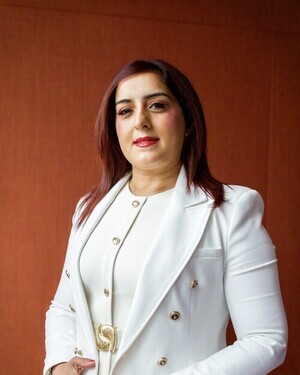
    Shabna Raja

    Advisory Partner,
    Life Sciences Week
    +44 (0) 121 227 4156
    info@lifesciencesweek.co.uk

    Bio

    Shabna Raja is a senior leader in enterprise transformation within Life Sciences, with over 20 years’ experience spanning pharma, consumer health and large-scale digital programmes.

    She specialises in bridging strategy and execution – helping organisations translate AI, data and digital innovation into tangible business outcomes. Her work focuses on complex transformation
    initiatives across commercial, data and operating model domains within regulated environments.

    Shabna spent seven years at GSK, where she played a key role in transformation programmes, including as part of the Consumer Health joint venture with Pfizer — one of the most significant integrations in the sector. This experience provided her with deep expertise in  organisational change, integration and operating model evolution at global scale.

    More recently, she has spent over three years working closely with Haleon through a strategic
    services partnership, leading enterprise client engagement and managing a multi-million-pound account while supporting transformation across a newly independent global organisation.

    Her experience spans the end-to-end life sciences value chain, including R&D, commercial, supply chain and patient engagement, giving her a holistic perspective on how technology and transformation can unlock value across the industry.

    Amjad Khan

    Executive Partner,
    Life Sciences Week
    +44 (0) 121 227 4156
    info@lifesciencesweek.co.uk

    Bio

    Amjad Khan is a UK-based entrepreneur, AI strategist, and senior technology leader with over 15 years of experience at Pfizer, where he held multiple leadership roles across digital strategy and transformation. As Global Digital Client Partner, he was responsible for digital strategy and execution across Global Business Units covering Vaccines, Hospital, and Medical Affairs. Most notably, he led the commercial launch for the Covid franchise transforming and accelerating the model for how new medicines are brought to market.

    Following his tenure at Pfizer, Amjad channelled his expertise into building at the frontier of AI. His work spans AI leadership, stakeholder engagement, and agile delivery helping organisations adopt and scale emerging  technologies to drive meaningful outcomes.

    Dr. Richard Fallon | Business Consultant | WM Life Sciences

    Dr. Richard Fallon

    Co Founder, Life Sciences Week 
    +44 (0) 121 227 4156
    info@lifesciencesweek.co.uk

    Bio

    Dr Richard Fallon is an entrepreneur and ecosystem builder who connects industry leaders, investors and public-sector stakeholders to accelerate collaboration and commercial growth.

    As the Founder of the Technology Supply Chain and co-founder of the Innovation Awards, he has spent more than two decades convening influential networks that help emerging businesses find capital, strategic partners and new routes to market.

    Richard’s work spans leadership and consultancy across major organisations, alongside building membership and partnership platforms that bring universities, industry and investors into the same room – and turn conversations into practical outcomes.

    With his focus on life sciences, Richard supports organisations and people driving breakthroughs in healthcare, biotechnology, medical technology and advanced research. He is passionate about creating the conditions for transformative ideas to move from concept to real-world impact – by connecting innovators with the funding, expertise and opportunities they need to scale.

    Through Life Sciences Week, Richard is championing the UK’s world-class life sciences community and helping position it at the forefront of innovation, investment and patient outcomes.

    Amy Deakin | Chief of Staff | WM Life Sciences

    Amy Deakin

    Event Managing Director,
    Life Sciences Week
    +44 (0) 121 227 4156
    info@lifesciencesweek.co.uk

    Bio

    Amy Deakin is a Birmingham-based leader specialising in building partnerships and fostering innovation in the life sciences sector. With a degree in Sport and Exercise Science, Amy brings a grounded understanding of human health and performance to her work and a strong interest in the developments shaping healthcare today.

    Amy is Managing Director of Life Sciences Week, part of the One Thousand Trades Group, and also serves as Director of One Thousand Trades Events. In these roles, she convenes researchers, clinicians and industry leaders to strengthen collaboration, unlock new partnerships and help accelerate real-world innovation across the life sciences ecosystem.

    Her career spans both commercial and third-sector environments. She began in automotive design, delivering projects for Volkswagen, McLaren, Bentley and Jaguar Land Rover, before moving into the third sector with Acorns Children’s Hospice. She later joined Western Union, working as a Partnerships Manager for international payments

    An avid netballer, Amy is a committed advocate for health and wellbeing – bringing energy, clarity and connection to everything she builds, and actively involved as a participant in health related research studies.

      Award Category Voting

      Here's a list of all categories you can vote for. Simply click each category to cast your vote. Voting in each category is not mandatory, so please feel free to click just the category that interests you.

      Day you've not voted in, will be denoted with an ❌

      If you're having issues submitting the form, please ensure all the category boxes are closed and try again.

      Recognising pioneering research, technology, or therapies that are transforming healthcare and biotechnology.

      No VoteProf. Alex RichterBlack Space TechnologyAston Vision Sciences

      Celebrating an emerging leader making significant contributions to the field through research, innovation, or leadership.

      Recognising pioneering research, technology, or therapies that are transforming healthcare and biotechnology.

      No VoteShashank Chaganty – VichagLeah Vanono - PBS InnovationsKloe Avon- KZ Organics

      Honouring successful cross-sector partnerships driving advancements in life sciences, from academia to industry.

      No VoteProf Liam Grover- WMHTIAJudith Stewart- Health Innovation West MidlandsAdam McGuinness - Plug and Play

      Awarding an individual or organisation for exceptional long-term impact on the industry.

      No VoteDavid KidneyMedilink MidlandsUniversity of Birmingham

      Highlighting innovations in treatments, diagnostics, or healthcare delivery that have significantly improved patient outcomes.

      No VoteJean-Louis Duprey - Linear DiagnosticsSian Dunning - MD-TECKarim Vissangy - HoloMedix

      Your Details