The human microbiome: unlocking the therapeutic potential within

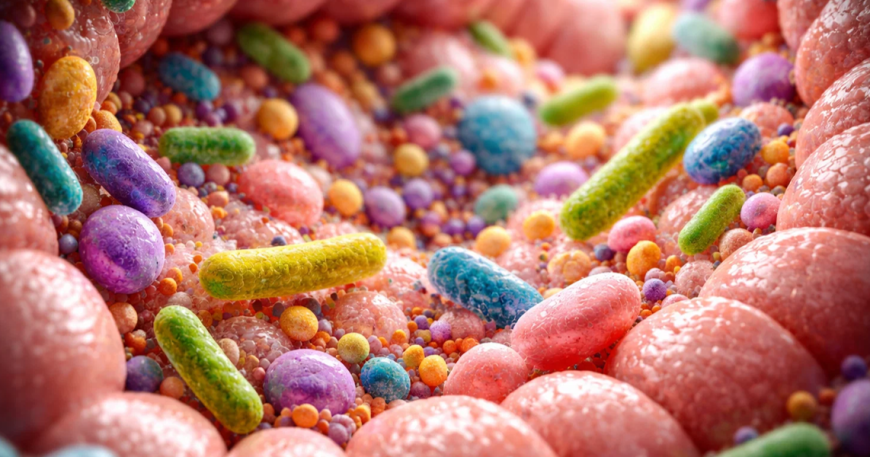
The human body is home to trillions of microorganisms, collectively known as the microbiome. Far from being passive passengers, these bacteria, viruses and fungi play a vital role in digestion, immune function and even mental health. In recent years, advances in sequencing technology and data analysis have transformed understanding of this complex ecosystem. The microbiome is now viewed not only as a marker of health, but as a potential target for innovative therapies.

As research accelerates, life sciences companies and academic institutions are exploring how manipulating the microbiome could prevent and treat disease.

Understanding the microbiome

The gut microbiome is the most studied microbial community in the body. It helps break down food, produce essential nutrients and protect against harmful pathogens. A balanced microbiome supports normal immune responses and metabolic function.

However, disruptions to this delicate ecosystem, often referred to as dysbiosis, have been linked to a range of conditions. These include inflammatory bowel disease, obesity, diabetes and certain autoimmune disorders. Emerging evidence also suggests a connection between the gut microbiome and mental health, through what is known as the gut-brain axis.

Understanding these relationships has opened new avenues for therapeutic intervention.

From probiotics to precision therapies

Early interest in the microbiome focused largely on probiotics and dietary supplements. While these products remain popular, scientific attention is increasingly shifting towards more targeted approaches.

Researchers are developing live biotherapeutic products, which contain specific strains of bacteria selected for their potential to treat particular conditions. Unlike general probiotics, these therapies are designed with defined mechanisms of action and undergo rigorous clinical testing.

Faecal microbiota transplantation, in which stool from a healthy donor is transferred to a patient, has already proven effective for recurrent Clostridioides difficile infection. Building on this success, scientists are investigating whether similar strategies could be adapted for other diseases.

Microbiome and personalised medicine

The composition of the microbiome varies significantly between individuals. Factors such as diet, environment, genetics and medication use all influence microbial balance. This variability aligns with the broader shift towards personalised medicine.

By analysing an individual’s microbiome profile, clinicians may one day tailor treatments more precisely. For example, understanding how a patient’s gut bacteria metabolise certain drugs could influence dosing decisions or predict side effects.

In oncology, researchers are examining how the microbiome affects responses to immunotherapy. Some studies suggest that specific bacterial populations may enhance or hinder the effectiveness of cancer treatments. If confirmed, modulating the microbiome could become part of standard care.

Challenges in translation

Despite growing enthusiasm, translating microbiome science into routine clinical practice presents challenges. The microbiome is extraordinarily complex, and cause-and-effect relationships are difficult to establish. Many associations observed in studies require further validation through large-scale trials.

Standardisation is another hurdle. Variations in sampling methods, sequencing techniques and data interpretation can lead to inconsistent findings. Establishing robust protocols will be essential to move from exploratory research to approved therapies.

Regulatory frameworks must also evolve. Live microbial therapies do not fit neatly into traditional categories of medicines, and ensuring safety and quality control requires careful oversight.

The UK’s role in microbiome research

The UK has emerged as a significant contributor to microbiome science. Academic institutions are conducting large-scale studies to map microbial diversity and explore its links to disease. Partnerships between universities, biotech firms and the NHS are supporting clinical trials of microbiome-based interventions.

National research funding and access to diverse patient populations provide a strong foundation for innovation. As understanding deepens, the UK is well positioned to translate discoveries into therapies that benefit patients domestically and internationally.

Looking ahead

The future of microbiome research is likely to extend beyond the gut. Scientists are exploring microbial communities in the skin, lungs and oral cavity, each with potential implications for health. Advances in artificial intelligence are helping to decode complex microbial interactions, accelerating discovery.

In time, routine healthcare may include microbiome profiling as part of preventative screening. Dietary advice, medication choices and targeted microbial therapies could be informed by an individual’s unique microbial signature.

Conclusion

The human microbiome represents one of the most intriguing frontiers in life sciences. Once overlooked, these microscopic communities are now recognised as central players in health and disease. By harnessing their therapeutic potential, researchers aim to develop more precise and effective treatments.

Significant scientific and regulatory challenges remain, but progress is steady. As evidence accumulates, microbiome-based therapies could become an integral component of personalised medicine. For patients and healthcare systems alike, understanding and modulating the microbiome offers a promising path towards improved outcomes and a more holistic view of health.

Author

Leave A Comment

Apply for a complimentary Conference Day VIP Pass

Apply for a complimentary Conference Day VIP Pass

Complimentary Conference Day VIP Passes are reserved for senior leaders and decision-makers with influence over purchasing, commissioning, investment or technology advancements and adoption across UK life sciences.

A Conference Day VIP Pass includes:

  • Complimentary access-all-areas to the Launch Day Conference
  • Access to the dedicated VIP green room alongside Conference speakers
  • Access to all general keynote, panel and programme sessions
  • Curated networking opportunities
  • Opportunities to meet conference speakers and other approved VIP attendees

The VIP Pass applies to the Launch Day Conference only. It does not include admission to the Life Sciences Week Gala Dinner or other separately ticketed events.

Applications are reviewed individually and submitting this form does not guarantee a complimentary pass. To maintain a balanced, high-quality audience, we may limit the number of VIP Passes issued to any one organisation.

    First Name *

    Last Name *

    Work Email Address *

    Telephone Number *

    Job Title *

    Organisation *

    LinkedIn

    Organisation Information

    Which best describes your organisation? *


    If other, please specify

    Which best describes your level of seniority? *

    If other, please specify

    Which areas are you responsible for or directly involved in? *

    If other, please specify

    What best describes your role in purchasing, investment, commissioning or adoption decisions? *

    Attendance Information

    Briefly, what is the number one thing you are hoping to get out of attending Life Sciences Week 2026? *

    Final Confirmation

    Is your role primarily focused on selling products or services, consultancy, account management or business development? *

    Please Confirm *

    I understand that VIP applications are subject to review and approval.
    I understand that the complimentary VIP Pass covers the Life Sciences Week Launch Day Conference only and does not include the Gala Dinner Awards or other separately ticketed events.
    The information supplied in this application is accurate.

    Shabna Raja

    Advisory Partner,
    Life Sciences Week
    +44 (0) 121 227 4156
    info@lifesciencesweek.co.uk

    Bio

    Shabna Raja is a senior leader in enterprise transformation within Life Sciences, with over 20 years’ experience spanning pharma, consumer health and large-scale digital programmes.

    She specialises in bridging strategy and execution – helping organisations translate AI, data and digital innovation into tangible business outcomes. Her work focuses on complex transformation
    initiatives across commercial, data and operating model domains within regulated environments.

    Shabna spent seven years at GSK, where she played a key role in transformation programmes, including as part of the Consumer Health joint venture with Pfizer — one of the most significant integrations in the sector. This experience provided her with deep expertise in  organisational change, integration and operating model evolution at global scale.

    More recently, she has spent over three years working closely with Haleon through a strategic
    services partnership, leading enterprise client engagement and managing a multi-million-pound account while supporting transformation across a newly independent global organisation.

    Her experience spans the end-to-end life sciences value chain, including R&D, commercial, supply chain and patient engagement, giving her a holistic perspective on how technology and transformation can unlock value across the industry.

    Amjad Khan

    Executive Partner,
    Life Sciences Week
    +44 (0) 121 227 4156
    info@lifesciencesweek.co.uk

    Bio

    Amjad Khan is a UK-based entrepreneur, AI strategist, and senior technology leader with over 15 years of experience at Pfizer, where he held multiple leadership roles across digital strategy and transformation. As Global Digital Client Partner, he was responsible for digital strategy and execution across Global Business Units covering Vaccines, Hospital, and Medical Affairs. Most notably, he led the commercial launch for the Covid franchise transforming and accelerating the model for how new medicines are brought to market.

    Following his tenure at Pfizer, Amjad channelled his expertise into building at the frontier of AI. His work spans AI leadership, stakeholder engagement, and agile delivery helping organisations adopt and scale emerging  technologies to drive meaningful outcomes.

    Dr. Richard Fallon | Business Consultant | WM Life Sciences

    Dr. Richard Fallon

    Co Founder, Life Sciences Week 
    +44 (0) 121 227 4156
    info@lifesciencesweek.co.uk

    Bio

    Dr Richard Fallon is an entrepreneur and ecosystem builder who connects industry leaders, investors and public-sector stakeholders to accelerate collaboration and commercial growth.

    As the Founder of the Technology Supply Chain and co-founder of the Innovation Awards, he has spent more than two decades convening influential networks that help emerging businesses find capital, strategic partners and new routes to market.

    Richard’s work spans leadership and consultancy across major organisations, alongside building membership and partnership platforms that bring universities, industry and investors into the same room – and turn conversations into practical outcomes.

    With his focus on life sciences, Richard supports organisations and people driving breakthroughs in healthcare, biotechnology, medical technology and advanced research. He is passionate about creating the conditions for transformative ideas to move from concept to real-world impact – by connecting innovators with the funding, expertise and opportunities they need to scale.

    Through Life Sciences Week, Richard is championing the UK’s world-class life sciences community and helping position it at the forefront of innovation, investment and patient outcomes.

    Amy Deakin | Chief of Staff | WM Life Sciences

    Amy Deakin

    Event Managing Director,
    Life Sciences Week
    +44 (0) 121 227 4156
    info@lifesciencesweek.co.uk

    Bio

    Amy Deakin is a Birmingham-based leader specialising in building partnerships and fostering innovation in the life sciences sector. With a degree in Sport and Exercise Science, Amy brings a grounded understanding of human health and performance to her work and a strong interest in the developments shaping healthcare today.

    Amy is Managing Director of Life Sciences Week, part of the One Thousand Trades Group, and also serves as Director of One Thousand Trades Events. In these roles, she convenes researchers, clinicians and industry leaders to strengthen collaboration, unlock new partnerships and help accelerate real-world innovation across the life sciences ecosystem.

    Her career spans both commercial and third-sector environments. She began in automotive design, delivering projects for Volkswagen, McLaren, Bentley and Jaguar Land Rover, before moving into the third sector with Acorns Children’s Hospice. She later joined Western Union, working as a Partnerships Manager for international payments

    An avid netballer, Amy is a committed advocate for health and wellbeing – bringing energy, clarity and connection to everything she builds, and actively involved as a participant in health related research studies.

      Award Category Voting

      Here's a list of all categories you can vote for. Simply click each category to cast your vote. Voting in each category is not mandatory, so please feel free to click just the category that interests you.

      Day you've not voted in, will be denoted with an ❌

      If you're having issues submitting the form, please ensure all the category boxes are closed and try again.

      Recognising pioneering research, technology, or therapies that are transforming healthcare and biotechnology.

      No VoteProf. Alex RichterBlack Space TechnologyAston Vision Sciences

      Celebrating an emerging leader making significant contributions to the field through research, innovation, or leadership.

      Recognising pioneering research, technology, or therapies that are transforming healthcare and biotechnology.

      No VoteShashank Chaganty – VichagLeah Vanono - PBS InnovationsKloe Avon- KZ Organics

      Honouring successful cross-sector partnerships driving advancements in life sciences, from academia to industry.

      No VoteProf Liam Grover- WMHTIAJudith Stewart- Health Innovation West MidlandsAdam McGuinness - Plug and Play

      Awarding an individual or organisation for exceptional long-term impact on the industry.

      No VoteDavid KidneyMedilink MidlandsUniversity of Birmingham

      Highlighting innovations in treatments, diagnostics, or healthcare delivery that have significantly improved patient outcomes.

      No VoteJean-Louis Duprey - Linear DiagnosticsSian Dunning - MD-TECKarim Vissangy - HoloMedix

      Your Details