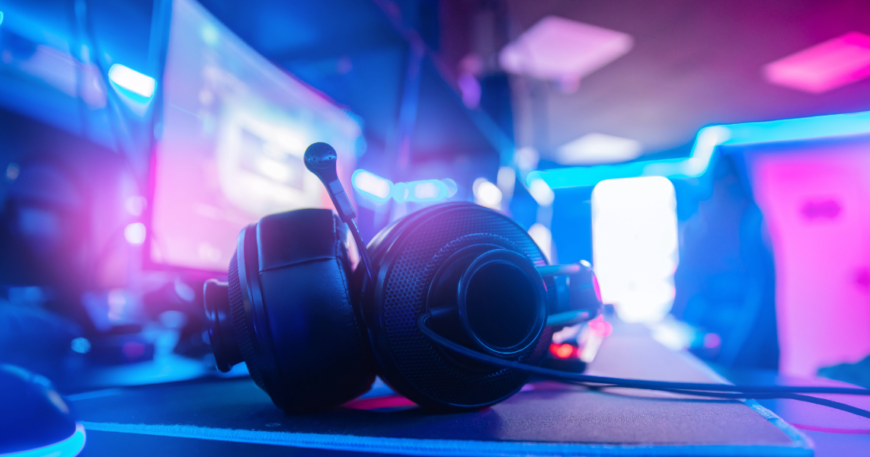
Repetitive strain injury has always been associated with office work, and the official figures still bear that out. But two studies published this year make a different point just as clearly: competitive gaming is producing wrist, hand and spine injuries at rates that rival many recognised sports, and the technology now being tested to prevent workplace RSI has moved well beyond ergonomic keyboards. Between the scale of the existing problem, its spread into a new population, and the tools now being built to catch it early, RSI is a more active area of research than its rather dated reputation suggests.
Half a Million Cases a Year
The Health and Safety Executive recorded 511,000 workers in Great Britain suffering from a work-related musculoskeletal disorder in the 2024/25 reporting year, a category that includes RSI alongside back problems and other conditions caused or made worse by work. It remains one of the most common categories of work-related ill health in the country, sitting alongside stress, depression and anxiety as one of the main reasons people take time off or leave a job entirely. The condition has never been confined to any one industry, affecting warehouse and manufacturing workers doing physically repetitive tasks as much as office staff at a keyboard, but it is notoriously under-reported, since symptoms often build gradually and workers may not connect early tingling or aching with their job until the condition is well established.
The Injury Nobody Expected From a Game Controller
Two studies published within weeks of each other in March 2026 put numbers on a problem that has been anecdotally obvious in competitive gaming for years. A German-led study in the journal Sports surveyed 1,229 e-athletes across all levels of competition and game genres, and found an overall injury rate of 19.6 injuries per 1,000 hours of gaming. Trunk and spine injuries were the most common category at 26 per cent of all injuries, largely cervical spine strain, with wrist injuries close behind at 18.3 per cent, most often tendovaginitis, an inflammation of the tendon sheath. Players averaged 21 hours of gaming a week, and only 11.4 per cent reported doing any kind of warm-up beforehand, a habit taken for granted in almost every other competitive physical activity.
A separate cross-sectional study of 365 Brazilian esports players, published in Scientific Reports the same month, found that just under a third had suffered an injury in the past year, with the wrist the single most affected area at 28.49 per cent, ahead of the lower back and fingers. Each additional year of playing was associated with an 11 per cent rise in the odds of wrist injury, and each additional weekly day of practice raised the odds by a further 18.3 per cent, a dose-response relationship that is familiar from repetitive strain research in office and industrial settings but had not previously been documented so clearly in gaming. Both studies stop short of calling for gaming to be treated exactly like a contact sport, but both make the case that it should be treated like one for injury prevention purposes, given how closely its injury patterns now resemble those in more established repetitive-motion activities.
Wearables Are Starting to Catch Injuries Before They Happen
On the prevention side, a National Safety Council survey of 405 non-managerial workers across manufacturing, construction, healthcare and transport, published in April 2026, found that nearly 70 per cent had experienced symptoms of a job-related musculoskeletal disorder, but that outcomes improved noticeably where employers had introduced injury-prevention technology. Wearable motion sensors, computer vision systems that monitor posture and movement and physical support technology such as exoskeletons were all in use across the surveyed workplaces. Confidence that the technology was reducing symptoms was highest for robots and cobots at 56 per cent and exoskeletons at 54 per cent, and across every category of device surveyed, at least 70 per cent of workers reported an improvement in job satisfaction alongside the physical benefit. The survey’s authors noted that outcomes were consistently better where workers had been involved in choosing and setting up the technology themselves, rather than having it introduced without consultation, a detail that matters more than the technology’s specifications when it comes to whether people actually use it correctly.
A Condition That Follows the Movement, Not the Job Title
What connects a warehouse worker, an office employee and a nineteen-year-old competitive gamer is not the job but the movement, the same joints and tendons put through the same repeated motion for hours at a stretch, whatever the setting. The HSE figures describe the scale of that problem as it already exists. The esports research describes a population that has grown into the same injury pattern without anyone quite noticing, largely because gaming was never classified alongside the activities RSI research usually studies. And the wearable technology research suggests that catching the problem early, rather than treating it after it becomes chronic, may finally be catching up with how and where the injury actually happens. RSI has outgrown its old reputation as a desk-bound condition, and the research is only just catching up with where it has spread.
Sources: Health and Safety Executive; Sports (MDPI); Scientific Reports (Nature); National Safety Council.