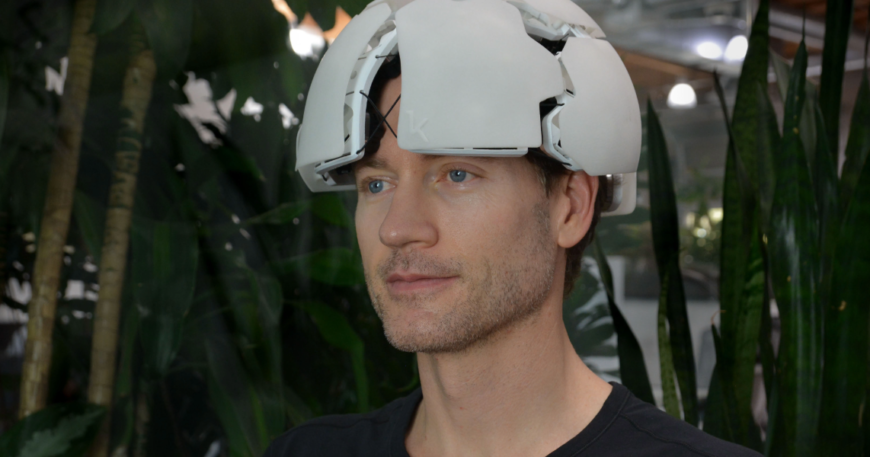
What if we could slow down the aging process? Could scientific advances help us live longer, healthier lives, or will the dream of immortality stay as a science fiction fantasy? These questions are at the heart of modern-day science.
Individual, Bryan Johnson, an entrepreneur, has attracted heaps of attention to lingering questions in the science world. Through his ambitious longevity experiment, his attempting to understand if humans aging can be slowed down through carefully monitored lifestyle changes, and a life of taking essential medication. His ongoing journey raises fascinating questions about human biology, the future of medicine and just how far our knowledge of humans can go in extending life and slowing aging.
Who is Bryan Johnson?
Bryan Johsnson is a technology entrepreneur who founded the company Braintree, which acquired the mobile payment service, Venmo, before being sold to PayPal in 2013. He has since turned his interest and attention to longevity research, launching Project Blueprint in 2021.
His goal is to improve his health and slow biological aging through monitoring different aspects of his body and lifestyle. Bryan follows a highly structured routine, including carefully planned nutrition, regular exercise, consistent sleep and extensive medical testing daily. He regularly trials different supplements and other interventions under strict medical supervision.
Johnson documents his work and progress publicly, sharing most details of his journey online, including health measurements, details of his routine, and medication he trials; he shares all this on his website, Blueprint. His project has attracted heaps of attention worldwide. He has fundamentally sparked a debate surrounding whether technology could successfully change how us human’s age.
What actually happens when we age?
To understand Johnson’s mission, an understanding needs to be had around the biology of ageing.
Ageing is a complex biological process involving changes throughout the body. However, chronological and biological age are two different things. Chronological age measures how long someone has lived, whereas biological estimates attempt to access aspects of the body’s condition, using different measurements, including biomarkers and molecular data.
Inside Project Blueprint
Johnson’s approach combines established health practices with experimental longevity interventions.
Johnson states that the three key elements to ultimate longevity are nutrition, sleep and exercise. Additionally, Johnson uses extensive testing to monitor different biomarkers and assess how his body responds to changes in his routine. This reflects an important principle in life sciences: collecting data can help researchers identify patterns and generate hypotheses.
Although, there is an important distinction between monitoring health and proving that a treatment works. Even if an individuals measurements improve, this does not automatically correlate to having an extended life span. Johnson’s experiment is personal; it is not classed as a clinical trial. His method and overall protocol have not been established as a proven method of reversing human ageing.
The ethical questions behind human longevity
Beyond the biology, longevity research has brought a few ethical questions into spotlight.
If future treatments significantly extend healthy lifespan, who will be able to access them? Could expensive interventions increase existing health inequalities? What would a larger age span mean for healthcare systems, population growth and the environment?
There is also a question about what success should look like. Is the ultimate goal simply to live for as many years as possible, or should science focus on increasing the number of years people can live in good health?
For many researchers, extending health span, the period of life spent in good health, is a more meaningful and achievable objective than pursuing immortality.
What can we learn about Bryan Johnson?
Bryan Johnson’s longevity project demonstrates how life sciences bring together biology, medicine, technology and data analysis to investigate some of humanity’s biggest questions.
Although his ambition to overcome ageing remains unproven, it draws attention to legitimate scientific challenges: understanding why our bodies change over time, identifying the mechanisms behind age-related diseases and discovering ways to maintain health as we grow older.
Perhaps the most important lesson is that exciting scientific ideas require evidence. Extraordinary claims must be tested through reproducible research, rigorous clinical trials and independent evaluation.