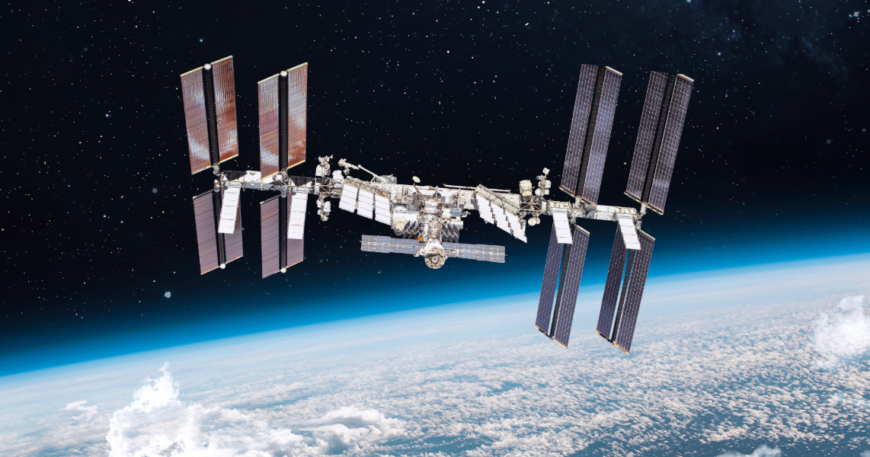
A cancer drug that once took a 30-minute hospital infusion can now be delivered by injection in as little as one minute, thanks partly to crystals grown on the International Space Station, four Artemis II astronauts have had their own bone marrow cells flown around the Moon inside miniature lab-on-a-chip “avatars,” and Mayo Clinic researchers are using microgravity to hunt down the single protein that may explain why bones weaken in space, and in ageing bodies on Earth. Space exploration has never been a purely engineering pursuit. In 2026, it is functioning as one of life sciences’ more productive laboratories.
Very little about orbit is hospitable to the human body. Weightlessness, radiation unfiltered by a planetary magnetosphere and the total absence of convection all disrupt biological processes in ways no lab on Earth can replicate. That is precisely what makes the environment useful. Three developments this year, spanning a completed drug approval, a live astronaut experiment and an ongoing search for a disease mechanism, show what happens when researchers treat those disruptions as an asset rather than an obstacle.
Crystals Grown in Orbit, Now in a One-Minute Injection
In February 2017, Merck Research Laboratories, led by principal investigator Paul Reichert, sent samples of pembrolizumab, the active ingredient in the cancer therapy Keytruda, to the space station aboard SpaceX CRS-10, using the Protein Crystallization Facility to grow the drug’s crystals free of the sedimentation and convection currents that distort crystal formation on Earth. When the team published its results in the journal npj Microgravity in December 2019, the space-grown crystalline suspensions of the therapeutic antibody were more uniform, lower in viscosity and more homogenous than ground-based controls, insights the team then applied back on Earth to redesign how the drug itself could be manufactured and delivered.
That work fed directly into KEYTRUDA QLEX, a subcutaneous formulation of pembrolizumab that the FDA approved on 19 September 2025 across 38 solid tumour indications. Where the original intravenous drug required roughly a 30-minute hospital infusion, the new formulation can be injected into the thigh or abdomen in one minute every three weeks, or two minutes every six weeks, and in the pivotal trial supporting approval it showed comparable outcomes to the IV version, with an overall response rate of 45% against 42% in 377 randomised patients. NASA’s own account of the project, published on its Scientific Visualization Studio in April 2026, credits the microgravity research aboard the station with providing the early insight into crystal structure and particle size that made the reformulation possible. It is a rare, traceable line from an experiment run 400 kilometres up to a treatment now given in doctors’ offices.
Flying Astronauts’ Own Cells Around the Moon
The second story is still being written. When Artemis II launched on 1 April 2026, sending four astronauts on a roughly 10-day lunar flyby further than any humans have travelled since Apollo, it carried more than its crew. Bone Marrow Chips, built from blood cells drawn from each of the four astronauts and grown on Organ Chip technology developed at Harvard’s Wyss Institute and commercialised by Emulate Inc., flew alongside them aboard Orion as part of the AVATAR investigation, short for A Virtual Astronaut Tissue Analog Response. A matched set of chips, built from the same cells, stayed behind on Earth under otherwise identical conditions.
Bone marrow was chosen deliberately: it is unusually vulnerable to radiation and is the source of the circulating blood cells that have already been found to change in astronauts after spaceflight. By comparing the flown chips against their Earth-bound twins after the mission, and against the astronauts’ own before-and-after blood samples, the AVATAR team, led by Wyss founding director Donald Ingber and run in collaboration with NASA, BARDA and the National Center for Advancing Translational Sciences, hopes to isolate exactly what radiation and microgravity do to blood-forming cells, patient by patient rather than in aggregate. “By sending patient-specific ‘avatars’ of astronaut tissues into space, we can study risks in a personalized way never before possible,” Ingber said of the investigation. If it works, NASA’s Lisa Carnell, director of the agency’s Biological and Physical Sciences Division, has said the same personalised chip technology “could enable us to personalize medical kits for astronauts on future deep-space missions, as well as impact patient care right here on Earth.”
Chasing the Protein Behind Bone Loss
The third strand returns to a problem space medicine has documented for decades without fully explaining: astronauts on long-duration missions lose bone density at roughly 1% to 2% a month, even with rigorous exercise routines, and nobody has been entirely sure why. Mayo Clinic’s Abba Zubair, a physician-scientist who has now sent four separate experiments to the space station, is chasing a specific suspect. Earlier research aboard the station, the MABL-A investigation, suggested that microgravity promotes signalling by a protein called IL-6 in a way that tips mesenchymal stem cells, which normally mature into new bone, towards degrading it instead.
The follow-up experiment, MABL-B, launched aboard the SpaceX Dragon capsule on the 33rd Commercial Resupply Mission on 24 August 2025 and cultured mesenchymal stem cells alongside other bone cells for 19 days on the station, testing a compound designed to block that IL-6 signal. “If this compound we are testing is able to block the impact of microgravity to slow or stop bone loss, then we can find a treatment for the bone loss in space, and that might also give us a clue into how we may treat people on Earth,” Zubair has said. The stakes on Earth are considerable: IL-6-driven bone loss is implicated in osteoporosis, a disease that affects hundreds of millions of people worldwide, and in the more specific bone loss seen in menopausal women and patients confined to bed rest for extended periods, conditions that share more with an astronaut’s physiology than they might first appear to.
A Laboratory With No Walls
None of these three stories reduces to “space is inspiring.” A drug crystal behaves differently without gravity pulling it toward sedimentation. A bone cell signals differently without mechanical load. Radiation reaches a cell differently without a planet’s magnetic field in the way. Those are specific, physical differences, and each one has turned into a specific, traceable line of medical research: a cancer drug patients now receive in a doctor’s office in one minute, a live test of whether astronaut-specific tissue chips can personalise deep-space medicine, and an active hunt for the molecular signal behind a form of bone loss that matters as much to an ageing population on Earth as it does to a crew bound for Mars. Space exploration was never going to replace a laboratory. What 2026 shows is that, increasingly, it does not need to.
Sources include Merck, NASA, the ISS National Laboratory, the Wyss Institute for Biologically Inspired Engineering at Harvard University, and Mayo Clinic News Network.