The Ambulance Is Becoming One of Life Sciences’ Best Laboratories

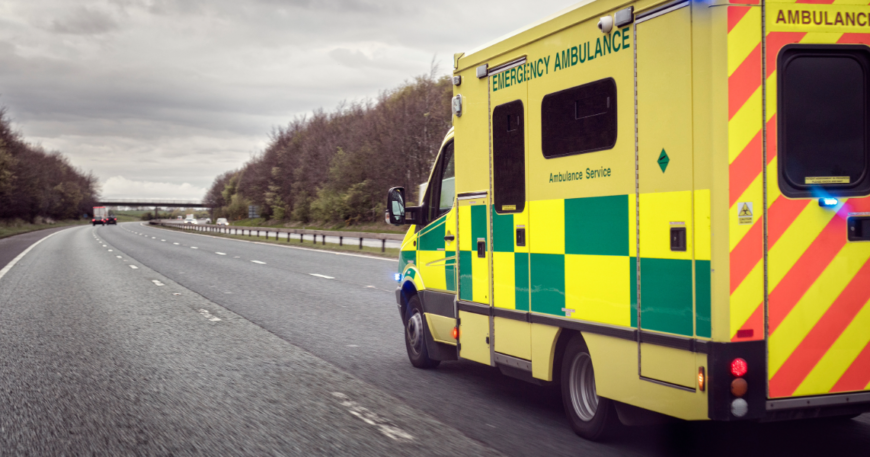
An ambulance crew is, among other things, a rolling site of live clinical research. Three separate stories from the past few months show how much that setting now contributes to life sciences beyond simply getting someone to hospital. London’s cardiac arrest survival figures have just reached their highest point in six years, credited largely to what happens in the minutes before paramedics arrive. A major international trial run out of UK air ambulances has just delivered a firmly negative result on whether whole blood transfusion in the field saves more lives than standard care. And ambulance services across the country are quietly testing whether artificial intelligence can take notes so clinicians do not have to. None of this happens in a laboratory. It happens on the way to one.

The Difference Bystanders Make

London Ambulance Service reported in January 2026 that cardiac arrest survival in the capital had reached 10.9 per cent, roughly one in nine people, matching pre-pandemic levels and the best result in six years. More than 2,500 cardiac arrest patients received bystander CPR before paramedics arrived, but the figures also expose a stark postcode lottery. Islington recorded bystander CPR in 74.4 per cent of cases, the highest in London, while Bromley and Barking and Dagenham sat at 54 per cent, a 20 percentage point gap between the best and worst performing boroughs.

Consultant Paramedic Mark Faulkner said early chest compressions and defibrillator use from bystanders “more than doubles a person’s chance of surviving,” and that these are skills that take only minutes to learn. That claim is backed by a sustained public health effort rather than a single campaign: nearly 47,000 Londoners have been trained through the London Lifesavers programme since September 2021, and around 11,000 public defibrillators are now sited across the city. The improvement in survival is credited to a combination of that bystander training, faster ambulance response times and quicker 999 call answering, which is a useful reminder that some of the most significant gains in emergency medicine now happen before a clinician is anywhere near the patient.

A Trial That Said No

Not every piece of ambulance research produces a positive result, and the SWiFT trial is a good example of why that matters. The trial, sponsored by NHS Blood and Transplant and run with Queen Mary University of London, Barts Health NHS Trust, participating air ambulance services and Defence Medical Services, tested whether giving trauma patients whole blood in the field, rather than red blood cells and plasma administered separately as is standard practice, improved outcomes. Over two years from December 2022, 942 patients were recruited, with 616 eligible for the main analysis, 314 receiving whole blood and 302 receiving standard component therapy.

The result, published in the New England Journal of Medicine in March 2026, was a clear no. Death or the need for a massive transfusion within 24 hours occurred in 48.7 per cent of the whole blood group compared with 47.7 per cent of the standard care group, a difference the researchers described as not statistically significant, with similar mortality and safety outcomes across both arms throughout. A negative trial of this size is not a failure. Whole blood is more complex and expensive to store and deploy in an ambulance than separate components, and this result gives services solid evidence that switching to it would not be worth that cost, rather than leaving the question to guesswork or enthusiasm for a plausible-sounding idea.

Listening In on the 999 Call

The third strand is less about treatment and more about time. South East Coast Ambulance Service is piloting an AI tool, built by the company Tortus, that listens to calls handled by clinicians in its Emergency Operations Centre and automatically turns the conversation into a structured medical record, a task that would otherwise mean a clinician manually typing notes during or after the call. Clinicians still review and approve every note before it is used. The pilot, running through February 2026, is being tested alongside similar trials at London Ambulance Service and South Western Ambulance Service, and sits within the NHS’s wider 10-year plan commitment to bring AI into clinical operations under close supervision rather than at arm’s length.

The stated aim is straightforward: give clinicians back the minutes currently spent writing up a call so they can spend them on the next patient instead, while producing a more consistent clinical record than handwritten notes typically allow. It is a small, unglamorous piece of technology compared with a landmark drug trial, but in a service where minutes measurably change survival odds, as the cardiac arrest figures show, time saved on documentation is not a trivial gain.

The Common Thread

A bystander with two minutes of training, a randomised trial testing an expensive new protocol against the one already in use and software quietly reclaiming a clinician’s time are not obviously related. What connects them is that an ambulance is one of the few places in medicine where the gap between an intervention and its outcome is measured in minutes rather than months, which makes it an unusually honest testing ground. Ideas that sound sensible, like giving trauma patients whole blood, still have to prove themselves against a stopwatch and a control group. Skills that sound too simple to matter, like chest compressions from a stranger, turn out to double survival odds. Ambulances were built to move people quickly. What is becoming clearer is how much they also move evidence.


Sources: London Ambulance Service NHS Trust; New England Journal of Medicine; Queen Mary University of London; South East Coast Ambulance Service NHS Foundation Trust.

Author

Leave A Comment

Graham Combe

Strategic Consultant,
Life Sciences Week
+44 (0) 121 227 4156
info@lifesciencesweek.co.uk

Bio

Graham Combe is an experienced strategic consultant, relationship builder, and entrepreneur in the global life sciences sector. He holds a BSc (Hons) in Chemistry from University College London (UCL) and spent over a decade with Nature, where he pioneered key initiatives such as Nature’s BioPharma Dealmakers and Nature’s SciCafe.

In May 2011, he founded Biosell UK, a consulting and event management firm that collaborates with global life science publishers, event organizations, and marketing partners. Beyond BioSell, Combe is the founder or co-founder of several prominent networking and thought-leadership platforms, including #BiotechBuddies, #coffeebuddies, the #AgileLeaders Forum, and the Creative Disruption Forum—the latter three events co-hosted with his business partner, Professor Tony Sedgwick.

Specializing in the early-to-mid stages of drug development (from pre-clinical research through Phase 3 and clinical proof-of-concept), Graham focuses on facilitating forums to promote peer-to-peer discussion, strategic growth, investment and meaningful connections between biotech innovators, investors, and industry service providers.

Apply for a complimentary Conference Day VIP Pass

Apply for a complimentary Conference Day VIP Pass

Complimentary Conference Day VIP Passes are reserved for senior leaders and decision-makers with influence over purchasing, commissioning, investment or technology advancements and adoption across UK life sciences.

A Conference Day VIP Pass includes:

  • Complimentary access-all-areas to the Launch Day Conference
  • Access to the dedicated VIP green room alongside Conference speakers
  • Access to all general keynote, panel and programme sessions
  • Curated networking opportunities
  • Opportunities to meet conference speakers and other approved VIP attendees

The VIP Pass applies to the Launch Day Conference only. It does not include admission to the Life Sciences Week Gala Dinner or other separately ticketed events.

Applications are reviewed individually and submitting this form does not guarantee a complimentary pass. To maintain a balanced, high-quality audience, we may limit the number of VIP Passes issued to any one organisation.

    First Name *

    Last Name *

    Work Email Address *

    Telephone Number *

    Job Title *

    Organisation *

    LinkedIn

    Organisation Information

    Which best describes your organisation? *


    If other, please specify

    Which best describes your level of seniority? *

    If other, please specify

    Which areas are you responsible for or directly involved in? *

    If other, please specify

    What best describes your role in purchasing, investment, commissioning or adoption decisions? *

    Attendance Information

    Briefly, what is the number one thing you are hoping to get out of attending Life Sciences Week 2026? *

    Final Confirmation

    Is your role primarily focused on selling products or services, consultancy, account management or business development? *

    Please Confirm *

    I understand that VIP applications are subject to review and approval.
    I understand that the complimentary VIP Pass covers the Life Sciences Week Launch Day Conference only and does not include the Gala Dinner Awards or other separately ticketed events.
    The information supplied in this application is accurate.

    Shabna Raja

    Advisory Partner,
    Life Sciences Week
    +44 (0) 121 227 4156
    info@lifesciencesweek.co.uk

    Bio

    Shabna Raja is a senior leader in enterprise transformation within Life Sciences, with over 20 years’ experience spanning pharma, consumer health and large-scale digital programmes.

    She specialises in bridging strategy and execution – helping organisations translate AI, data and digital innovation into tangible business outcomes. Her work focuses on complex transformation
    initiatives across commercial, data and operating model domains within regulated environments.

    Shabna spent seven years at GSK, where she played a key role in transformation programmes, including as part of the Consumer Health joint venture with Pfizer — one of the most significant integrations in the sector. This experience provided her with deep expertise in  organisational change, integration and operating model evolution at global scale.

    More recently, she has spent over three years working closely with Haleon through a strategic
    services partnership, leading enterprise client engagement and managing a multi-million-pound account while supporting transformation across a newly independent global organisation.

    Her experience spans the end-to-end life sciences value chain, including R&D, commercial, supply chain and patient engagement, giving her a holistic perspective on how technology and transformation can unlock value across the industry.

    Amjad Khan

    Executive Partner,
    Life Sciences Week
    +44 (0) 121 227 4156
    info@lifesciencesweek.co.uk

    Bio

    Amjad Khan is a UK-based entrepreneur, AI strategist, and senior technology leader with over 15 years of experience at Pfizer, where he held multiple leadership roles across digital strategy and transformation. As Global Digital Client Partner, he was responsible for digital strategy and execution across Global Business Units covering Vaccines, Hospital, and Medical Affairs. Most notably, he led the commercial launch for the Covid franchise transforming and accelerating the model for how new medicines are brought to market.

    Following his tenure at Pfizer, Amjad channelled his expertise into building at the frontier of AI. His work spans AI leadership, stakeholder engagement, and agile delivery helping organisations adopt and scale emerging  technologies to drive meaningful outcomes.

    Dr. Richard Fallon | Business Consultant | WM Life Sciences

    Dr. Richard Fallon

    Co Founder, Life Sciences Week 
    +44 (0) 121 227 4156
    info@lifesciencesweek.co.uk

    Bio

    Dr Richard Fallon is an entrepreneur and ecosystem builder who connects industry leaders, investors and public-sector stakeholders to accelerate collaboration and commercial growth.

    As the Founder of the Technology Supply Chain and co-founder of the Innovation Awards, he has spent more than two decades convening influential networks that help emerging businesses find capital, strategic partners and new routes to market.

    Richard’s work spans leadership and consultancy across major organisations, alongside building membership and partnership platforms that bring universities, industry and investors into the same room – and turn conversations into practical outcomes.

    With his focus on life sciences, Richard supports organisations and people driving breakthroughs in healthcare, biotechnology, medical technology and advanced research. He is passionate about creating the conditions for transformative ideas to move from concept to real-world impact – by connecting innovators with the funding, expertise and opportunities they need to scale.

    Through Life Sciences Week, Richard is championing the UK’s world-class life sciences community and helping position it at the forefront of innovation, investment and patient outcomes.

    Amy Deakin | Chief of Staff | WM Life Sciences

    Amy Deakin

    Event Managing Director,
    Life Sciences Week
    +44 (0) 121 227 4156
    info@lifesciencesweek.co.uk

    Bio

    Amy Deakin is a Birmingham-based leader specialising in building partnerships and fostering innovation in the life sciences sector. With a degree in Sport and Exercise Science, Amy brings a grounded understanding of human health and performance to her work and a strong interest in the developments shaping healthcare today.

    Amy is Managing Director of Life Sciences Week, part of the One Thousand Trades Group, and also serves as Director of One Thousand Trades Events. In these roles, she convenes researchers, clinicians and industry leaders to strengthen collaboration, unlock new partnerships and help accelerate real-world innovation across the life sciences ecosystem.

    Her career spans both commercial and third-sector environments. She began in automotive design, delivering projects for Volkswagen, McLaren, Bentley and Jaguar Land Rover, before moving into the third sector with Acorns Children’s Hospice. She later joined Western Union, working as a Partnerships Manager for international payments

    An avid netballer, Amy is a committed advocate for health and wellbeing – bringing energy, clarity and connection to everything she builds, and actively involved as a participant in health related research studies.

      Award Category Voting

      Here's a list of all categories you can vote for. Simply click each category to cast your vote. Voting in each category is not mandatory, so please feel free to click just the category that interests you.

      Day you've not voted in, will be denoted with an ❌

      If you're having issues submitting the form, please ensure all the category boxes are closed and try again.

      Recognising pioneering research, technology, or therapies that are transforming healthcare and biotechnology.

      No VoteProf. Alex RichterBlack Space TechnologyAston Vision Sciences

      Celebrating an emerging leader making significant contributions to the field through research, innovation, or leadership.

      Recognising pioneering research, technology, or therapies that are transforming healthcare and biotechnology.

      No VoteShashank Chaganty – VichagLeah Vanono - PBS InnovationsKloe Avon- KZ Organics

      Honouring successful cross-sector partnerships driving advancements in life sciences, from academia to industry.

      No VoteProf Liam Grover- WMHTIAJudith Stewart- Health Innovation West MidlandsAdam McGuinness - Plug and Play

      Awarding an individual or organisation for exceptional long-term impact on the industry.

      No VoteDavid KidneyMedilink MidlandsUniversity of Birmingham

      Highlighting innovations in treatments, diagnostics, or healthcare delivery that have significantly improved patient outcomes.

      No VoteJean-Louis Duprey - Linear DiagnosticsSian Dunning - MD-TECKarim Vissangy - HoloMedix

      Your Details