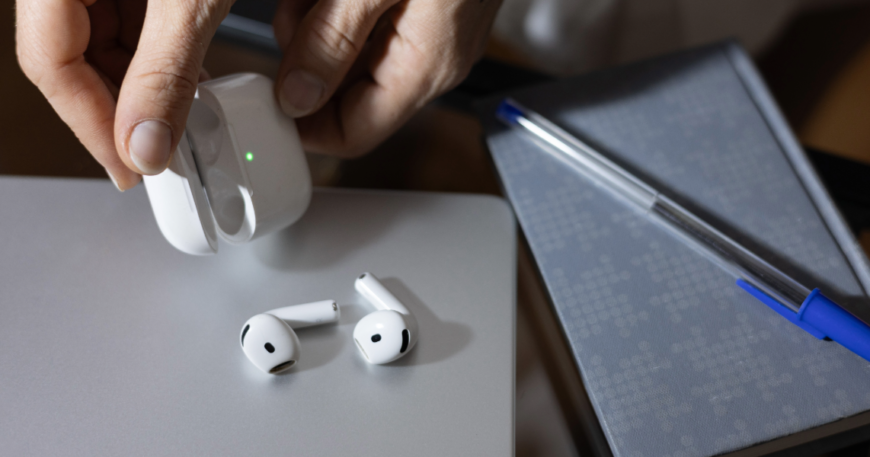
Independent researchers in Ireland have confirmed that AirPods Pro 3 can track heart rate almost as accurately as a hospital-grade chest strap, an audiology team has shown that AirPods Pro 2 can screen hearing loss nearly as well as a booth-based hearing test in a third of the time, and Apple’s own study with the University of Michigan, now covering more than 160,000 people, has used that same technology to uncover a genuine link between hearing loss and how fast older adults walk. A pair of consumer earbuds bought primarily for music has quietly become one of the more interesting research instruments in life sciences.
AirPods were not designed as medical devices. They were designed to sell music and phone calls. What has changed in the past two years, and become especially clear in 2026, is that the sensors Apple added to make its earbuds smarter, an optical heart rate sensor, a microphone array capable of doubling as an audiometer, have turned out to be accurate enough, and installed on enough ears, that independent scientists are now treating them as legitimate research tools rather than gadgets.
An Independent Check on the Heart Rate Sensor
In April, a team led by Rory Lambe at the Insight Research Ireland Centre for Data Analytics, University College Dublin, published a laboratory validation study in PLOS Digital Health testing whether AirPods Pro 3’s built-in optical heart rate sensor could be trusted during exercise, historically a hard test for any wearable sensor. Forty healthy adults completed a graded treadmill protocol, walking and running through stages designed to push their heart rate to between 40% and 85% of their age-predicted maximum, while wearing AirPods Pro 3 alongside a Polar H10 chest strap, a device already validated against ECG as a reference standard.
Across 16,735 paired five-second measurement windows, the AirPods Pro 3 came out very close to the chest strap: an average bias of just −0.03 beats per minute, meaning no meaningful tendency to over- or under-read, and an overall mean absolute error of 2.08 beats per minute, or about 2.02% of the true reading. The one caveat, and it is an important one, is that individual readings became noticeably less consistent at higher exercise intensities, even though the average across the group stayed accurate. The study’s own summary is blunt about what that means in practice: AirPods Pro 3 can provide “useful heart rate information for fitness tracking in healthy adults,” but “should not replace clinical-grade equipment when high precision is required.” That is a genuinely useful distinction, and one that only exists because someone with no commercial stake in Apple’s products decided to test the claim properly.
A Hearing Test in Under Six Minutes
The second strand of evidence concerns hearing rather than heart rate. Apple’s Hearing Test Feature, built into AirPods Pro 2 and paired with an iPhone, has been marketed since 2024 as a way to check for hearing loss at home. This year, a research team led by M. Kruger, Vinaya Manchaiah and De Wet Swanepoel put that feature through a formal clinical comparison against pure-tone audiometry, the standard hearing test performed by an audiologist in a sound-treated booth, publishing their findings in Otolaryngology–Head and Neck Surgery.
Twenty-five adults with self-reported mild-to-moderate hearing loss each completed a full audiologist-administered hearing test followed by two independent AirPods-based tests, generating 400 threshold comparisons in total. The results held up well: 86.5% of the AirPods-derived thresholds fell within 10 decibels of the professional test, meeting the accuracy bar researchers had set in advance, and repeat testing on the same people was consistent, with 96.6% of thresholds landing within 10 decibels on a second attempt. The standout figure, though, was speed. The AirPods test took a median of 5.5 minutes, against 10 minutes for the full professional assessment, a statistically significant difference the researchers noted could matter a great deal for getting more people screened in the first place. Their conclusion was cautiously optimistic: the feature showed “clinically acceptable accuracy and test-retest reliability,” useful groundwork for consumer-led hearing monitoring, though they were clear that further work is needed on how it performs across different devices and real-world conditions.
What Happens When 160,000 People Wear the Same Sensor
The most striking result this year, though, did not come from a small validation study at all. It came from scale. The Apple Hearing Study, run in partnership with the University of Michigan, has now enrolled more than 160,000 consented participants across the United States, making it one of the largest hearing research efforts ever conducted, precisely because it does not require anyone to visit a clinic. New findings released in May drew on that dataset to answer a question a small trial never could: what does hearing loss actually mean for people’s day-to-day lives?
Among nearly 85,000 participants who tested within the World Health Organization’s definition of “normal” hearing, 16% still rated their own hearing as fair or poor, and many reported real difficulty concentrating on speech or following conversations against background noise, despite passing the clinical threshold. In a separate analysis of 57,183 participants, the researchers found that worse hearing was associated with slower walking speed, a well-established marker of physical health and ageing, with the effect most pronounced in adults aged 60 and over. The study’s authors were careful to frame the implication constructively rather than alarmingly, writing that giving people the ability to track their own hearing over time, using the same four-frequency pure tone average measured by the Hearing Test Feature, “gives them the opportunity to track their hearing as it changes over time, even when classified as clinically normal, and to take steps to protect and assist their hearing over their lifetime.” They added that addressing hearing loss through tools like the Hearing Aid Feature “may help promote physical health over the life course.”
From Gadget to Instrument
None of these three results would exist if AirPods were simply popular. What made them useful to life sciences is the combination of the two things above: sensors accurate enough to survive independent scrutiny, and an installed base large enough to turn a niche clinical question into a population-level study almost overnight. A heart rate validation study with 40 participants and a hearing feasibility study with 25 are the kind of modest, careful science that ordinarily takes years to scale into anything with public health relevance. Apple’s own study, built on the exact same underlying technology, reached population scale in a fraction of that time simply because the sensor was already sitting in millions of ears. That is not a reason to treat consumer wearables as a substitute for clinical-grade medicine, as every study here is careful to say. It is a reason to take seriously what happens when ordinary consumer electronics are built well enough, and checked rigorously enough, to become part of the evidence base themselves.
Sources include PLOS Digital Health, Otolaryngology–Head and Neck Surgery, the Apple Hearing Study, the University of Michigan School of Public Health, and 9to5Mac.