Above the Tree Line: What Hiking and Mountaineering Are Teaching Life Sciences in 2026

A smartwatch tested against a mercury sphygmomanometer at 4,014 metres has just shown exactly where consumer health tech stops being trustworthy, a cargo drone in the Dolomites has cut mountain rescue evacuation times by two-thirds, and a review of decades of hiking research has quantified, in hard clinical numbers, why a walk in the hills counts as medicine. Hiking and mountaineering are not usually filed under life sciences, but in 2026 the overlap is becoming difficult to ignore.

Extreme and remote environments have always been useful to medicine precisely because they push the human body, and the technology strapped to it, past the point where things quietly work. A hospital ward rarely reveals a wearable sensor’s blindspots. A 4,000 metre ridge line does. Three separate strands of research and development this year, spanning consumer wearables, emergency medicine and public health, all trace back to people moving through mountains and hills, and each has something concrete to say about the life sciences sector back at sea level.

A Smartwatch Meets Its Limits at 4,000 Metres

In February, researchers from West China Hospital at Sichuan University, working with engineers from Huawei, published a study in Frontiers in Physiology testing how accurately a consumer smartwatch could measure blood oxygen and blood pressure across a genuine altitude gradient, from Chengdu at 500 metres up to Litang at 4,014 metres. The study compared 24 lowland migrants tracked as they ascended against 85 long-term residents already living at altitude, measuring the watch’s readings against a reference pulse oximeter and a traditional mercury sphygmomanometer.

The results were reassuring in one respect and cautionary in another. Blood oxygen readings stayed within the accuracy threshold set by the relevant international standard at every altitude tested, supporting the watch’s use for simple trend monitoring. Blood pressure was a different story. Above 2,500 metres, and particularly during acute ascent, the watch’s systolic and diastolic readings deviated from cuff-based measurements by more than the accepted margin, with errors most pronounced in the newly arrived migrant group rather than long-term residents whose bodies had already adapted. The authors were direct about what that means in practice, concluding that blood pressure readings “warrant cautious interpretation” above 2,500 metres, particularly during the acute phase of ascent, and that the case for substituting a cuffless, watch-based reading for a traditional cuff “reinforces the need for careful consideration” in physiologically stressed conditions like these. It is exactly the kind of finding that only shows up when a device is tested somewhere genuinely hostile to it, and it matters well beyond mountaineering, since the same consumer wearables are increasingly used to monitor people with high blood pressure at sea level too.

The Rescue Helicopter’s Understudy

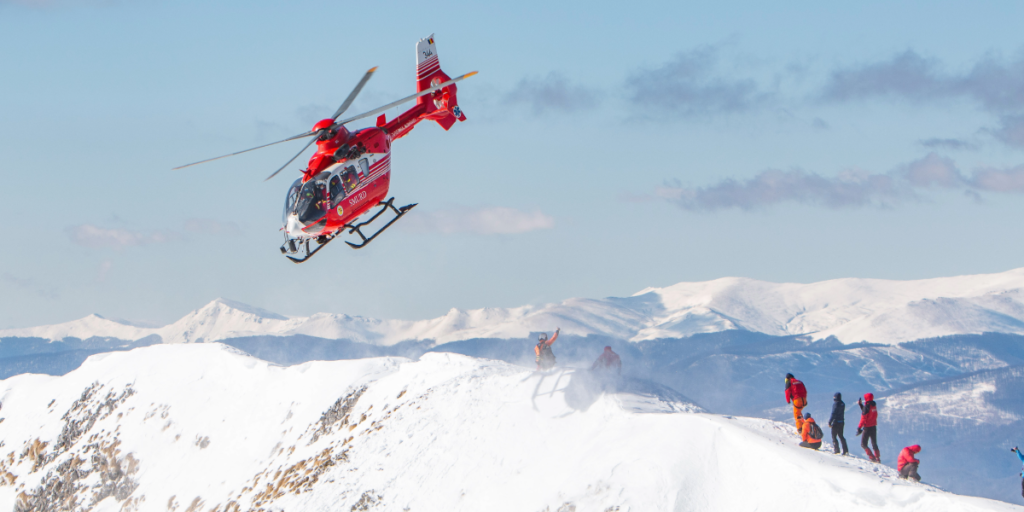
If wearables reveal where medical technology’s limits sit, the Dolomites have spent the past two years testing what can be built to work around them. The START2 Living Lab project, backed by the EU’s Interreg Italy-Austria programme and led by a consortium including Eurac Research’s Institute of Mountain Emergency Medicine and the drone manufacturer FlyingBasket, has spent 2024 to 2026 trialling heavy-lift cargo drones for mountain casualty evacuation. Field tests reported in June found that drone-assisted evacuations cut transfer times by up to three times compared with traditional ground-based rescue, while reducing the shocks and vibrations experienced by an injured patient by up to tenfold.

The project also produced a genuinely new piece of rescue technique: a “hot loading” procedure that allows a patient to be safely loaded onto a hovering drone rather than waiting for it to land, developed jointly with mountain emergency medicine researchers at Eurac. Moritz Moroder, FlyingBasket’s chief executive, called it evidence of “a fundamental shift: drones are no longer just support tools, but can become an active part of rescue operations.” Michiel van Veelen, a researcher at Eurac’s Institute of Mountain Emergency Medicine, was more cautious about the horizon this points towards, but no less clear about the destination: “If we implement this technology in the future, we can make mountain rescue much safer and less dependent on technology like helicopters.” Mountain Rescue England and Wales has separately continued equipping its volunteer teams with drones through 2026, with its Lake District team receiving a new unit in April.
The Evidence That a Walk in the Hills Is Preventive Medicine

The third strand is less about new technology and more about tallying up what has already been proven. An integrative review published in Frontiers in Public Health in January, led by researchers at Beijing Sport University and Hunan Normal University, pulled together decades of meta-analyses and systematic reviews on outdoor hiking to quantify its physical and mental health effects in a single place. The physical numbers are substantial: one meta-analysis of 42 studies included in the review found hiking associated with an average systolic blood pressure reduction of 3.72 mmHg and a diastolic reduction of 3.14 mmHg, alongside measurable improvements in resting heart rate, body fat percentage and six-minute walk distance, a standard clinical marker of cardiovascular fitness. On mental health, reviews included in the paper reported moderate to large reductions in depressive symptoms and anxiety and corresponding increases in positive affect, consistent enough across studies to describe hiking’s mental health benefit as one of the more reliably reproduced findings in the exercise literature. The review’s authors concluded that “outdoor hiking not only reduces the incidence of chronic diseases and promotes mental health improvements but also generates significant economic benefits, especially in tourism, employment, and related industries,” while noting that a standardised way of measuring those economic benefits still does not exist.

That evidence base already has a policy home in England. The cross-government Green Social Prescribing programme, a £5.77 million initiative running since October 2020 and project-managed at various stages by Defra and NHS England, has used exactly this kind of research to justify referring patients to nature-based activities, walking groups among them, instead of or alongside conventional treatment. Its first phase, running to March 2023, referred more than 8,500 people, with 85% take-up once offered and a social return on investment of up to £2.42 for every £1 spent, concentrated in areas with the highest socioeconomic deprivation. A second phase, backed by nearly £4 million of further funding, ran through March 2025, with further evaluation still to be published.

Same Terrain, Three Different Lessons

None of these three stories would usually sit in the same article. A cardiology paper about smartwatches, an EU-funded drone trial and a sports science review of hiking studies belong, on paper, to different disciplines entirely. What connects them is the mountain, or the hill, or simply the outdoors, as a proving ground: a place demanding enough to expose a wearable’s blind spots, remote enough to justify rebuilding how casualties are evacuated, and accessible enough that its health benefits can be prescribed to millions of people who will never go near a summit. Hiking and mountaineering are not adjacent to life sciences by coincidence. They are one of the places life sciences goes to find out what is actually true.

Sources include Frontiers in Physiology, Frontiers in Public Health, Eurac Research, FlyingBasket, Mountain Rescue England and Wales, and the National Academy for Social Prescribing.

Author

Leave A Comment

Graham Combe

Strategic Consultant,
Life Sciences Week
+44 (0) 121 227 4156
info@lifesciencesweek.co.uk

Bio

Graham Combe is an experienced strategic consultant, relationship builder, and entrepreneur in the global life sciences sector. He holds a BSc (Hons) in Chemistry from University College London (UCL) and spent over a decade with Nature, where he pioneered key initiatives such as Nature’s BioPharma Dealmakers and Nature’s SciCafe.

In May 2011, he founded Biosell UK, a consulting and event management firm that collaborates with global life science publishers, event organizations, and marketing partners. Beyond BioSell, Combe is the founder or co-founder of several prominent networking and thought-leadership platforms, including #BiotechBuddies, #coffeebuddies, the #AgileLeaders Forum, and the Creative Disruption Forum—the latter three events co-hosted with his business partner, Professor Tony Sedgwick.

Specializing in the early-to-mid stages of drug development (from pre-clinical research through Phase 3 and clinical proof-of-concept), Graham focuses on facilitating forums to promote peer-to-peer discussion, strategic growth, investment and meaningful connections between biotech innovators, investors, and industry service providers.

Secure your Launch Day Conference Pass

Be in the room where the future of life sciences is shaped.

Early Bird until 31 August: Save £155

Apply for a complimentary Conference Day VIP Pass

Apply for a complimentary Conference Day VIP Pass

Complimentary Conference Day VIP Passes are reserved for senior leaders and decision-makers with influence over purchasing, commissioning, investment or technology advancements and adoption across UK life sciences.

A Conference Day VIP Pass includes:

  • Complimentary access-all-areas to the Launch Day Conference
  • Access to the dedicated VIP green room alongside Conference speakers
  • Access to all general keynote, panel and programme sessions
  • Curated networking opportunities
  • Opportunities to meet conference speakers and other approved VIP attendees

The VIP Pass applies to the Launch Day Conference only. It does not include admission to the Life Sciences Week Gala Dinner or other separately ticketed events.

Applications are reviewed individually and submitting this form does not guarantee a complimentary pass. To maintain a balanced, high-quality audience, we may limit the number of VIP Passes issued to any one organisation.

    First Name *

    Last Name *

    Work Email Address *

    Telephone Number *

    Job Title *

    Organisation *

    LinkedIn

    Organisation Information

    Which best describes your organisation? *


    If other, please specify

    Which best describes your level of seniority? *

    If other, please specify

    Which areas are you responsible for or directly involved in? *

    If other, please specify

    What best describes your role in purchasing, investment, commissioning or adoption decisions? *

    Attendance Information

    Briefly, what is the number one thing you are hoping to get out of attending Life Sciences Week 2026? *

    Final Confirmation

    Is your role primarily focused on selling products or services, consultancy, account management or business development? *

    Please Confirm *

    I understand that VIP applications are subject to review and approval.
    I understand that the complimentary VIP Pass covers the Life Sciences Week Launch Day Conference only and does not include the Gala Dinner Awards or other separately ticketed events.
    The information supplied in this application is accurate.

    Shabna Raja

    Advisory Partner,
    Life Sciences Week
    +44 (0) 121 227 4156
    info@lifesciencesweek.co.uk

    Bio

    Shabna Raja is a senior leader in enterprise transformation within Life Sciences, with over 20 years’ experience spanning pharma, consumer health and large-scale digital programmes.

    She specialises in bridging strategy and execution – helping organisations translate AI, data and digital innovation into tangible business outcomes. Her work focuses on complex transformation
    initiatives across commercial, data and operating model domains within regulated environments.

    Shabna spent seven years at GSK, where she played a key role in transformation programmes, including as part of the Consumer Health joint venture with Pfizer — one of the most significant integrations in the sector. This experience provided her with deep expertise in  organisational change, integration and operating model evolution at global scale.

    More recently, she has spent over three years working closely with Haleon through a strategic
    services partnership, leading enterprise client engagement and managing a multi-million-pound account while supporting transformation across a newly independent global organisation.

    Her experience spans the end-to-end life sciences value chain, including R&D, commercial, supply chain and patient engagement, giving her a holistic perspective on how technology and transformation can unlock value across the industry.

    Amjad Khan

    Executive Partner,
    Life Sciences Week
    +44 (0) 121 227 4156
    info@lifesciencesweek.co.uk

    Bio

    Amjad Khan is a UK-based entrepreneur, AI strategist, and senior technology leader with over 15 years of experience at Pfizer, where he held multiple leadership roles across digital strategy and transformation. As Global Digital Client Partner, he was responsible for digital strategy and execution across Global Business Units covering Vaccines, Hospital, and Medical Affairs. Most notably, he led the commercial launch for the Covid franchise transforming and accelerating the model for how new medicines are brought to market.

    Following his tenure at Pfizer, Amjad channelled his expertise into building at the frontier of AI. His work spans AI leadership, stakeholder engagement, and agile delivery helping organisations adopt and scale emerging  technologies to drive meaningful outcomes.

    Dr. Richard Fallon | Business Consultant | WM Life Sciences

    Dr. Richard Fallon

    Co Founder, Life Sciences Week 
    +44 (0) 121 227 4156
    info@lifesciencesweek.co.uk

    Bio

    Dr Richard Fallon is an entrepreneur and ecosystem builder who connects industry leaders, investors and public-sector stakeholders to accelerate collaboration and commercial growth.

    As the Founder of the Technology Supply Chain and co-founder of the Innovation Awards, he has spent more than two decades convening influential networks that help emerging businesses find capital, strategic partners and new routes to market.

    Richard’s work spans leadership and consultancy across major organisations, alongside building membership and partnership platforms that bring universities, industry and investors into the same room – and turn conversations into practical outcomes.

    With his focus on life sciences, Richard supports organisations and people driving breakthroughs in healthcare, biotechnology, medical technology and advanced research. He is passionate about creating the conditions for transformative ideas to move from concept to real-world impact – by connecting innovators with the funding, expertise and opportunities they need to scale.

    Through Life Sciences Week, Richard is championing the UK’s world-class life sciences community and helping position it at the forefront of innovation, investment and patient outcomes.

    Amy Deakin | Chief of Staff | WM Life Sciences

    Amy Deakin

    Event Managing Director,
    Life Sciences Week
    +44 (0) 121 227 4156
    info@lifesciencesweek.co.uk

    Bio

    Amy Deakin is a Birmingham-based leader specialising in building partnerships and fostering innovation in the life sciences sector. With a degree in Sport and Exercise Science, Amy brings a grounded understanding of human health and performance to her work and a strong interest in the developments shaping healthcare today.

    Amy is Managing Director of Life Sciences Week, part of the One Thousand Trades Group, and also serves as Director of One Thousand Trades Events. In these roles, she convenes researchers, clinicians and industry leaders to strengthen collaboration, unlock new partnerships and help accelerate real-world innovation across the life sciences ecosystem.

    Her career spans both commercial and third-sector environments. She began in automotive design, delivering projects for Volkswagen, McLaren, Bentley and Jaguar Land Rover, before moving into the third sector with Acorns Children’s Hospice. She later joined Western Union, working as a Partnerships Manager for international payments

    An avid netballer, Amy is a committed advocate for health and wellbeing – bringing energy, clarity and connection to everything she builds, and actively involved as a participant in health related research studies.

      Award Category Voting

      Here's a list of all categories you can vote for. Simply click each category to cast your vote. Voting in each category is not mandatory, so please feel free to click just the category that interests you.

      Day you've not voted in, will be denoted with an ❌

      If you're having issues submitting the form, please ensure all the category boxes are closed and try again.

      Recognising pioneering research, technology, or therapies that are transforming healthcare and biotechnology.

      No VoteProf. Alex RichterBlack Space TechnologyAston Vision Sciences

      Celebrating an emerging leader making significant contributions to the field through research, innovation, or leadership.

      Recognising pioneering research, technology, or therapies that are transforming healthcare and biotechnology.

      No VoteShashank Chaganty – VichagLeah Vanono - PBS InnovationsKloe Avon- KZ Organics

      Honouring successful cross-sector partnerships driving advancements in life sciences, from academia to industry.

      No VoteProf Liam Grover- WMHTIAJudith Stewart- Health Innovation West MidlandsAdam McGuinness - Plug and Play

      Awarding an individual or organisation for exceptional long-term impact on the industry.

      No VoteDavid KidneyMedilink MidlandsUniversity of Birmingham

      Highlighting innovations in treatments, diagnostics, or healthcare delivery that have significantly improved patient outcomes.

      No VoteJean-Louis Duprey - Linear DiagnosticsSian Dunning - MD-TECKarim Vissangy - HoloMedix

      Your Details