Tariffs on branded drugs took effect on 31 July 2026 for the largest companies, with generics now on a phased tariff timeline to 2028. A biologics boom and an industrialisation crisis in cell and gene therapy are converging to force the most significant rethink of pharmaceutical manufacturing in a generation.
For most of the past three decades, the logic of pharmaceutical manufacturing was simple: make drugs where it is cheapest, and ship them where they are needed. Active pharmaceutical ingredients flowed from India and China into formulation facilities in Europe and the United States. The system was efficient, globalised and, as the Covid-19 pandemic made clear, extraordinarily fragile. In 2026, that logic is being comprehensively dismantled, driven simultaneously by geopolitical pressure, a structural shift in the medicines being developed and a growing realisation that the manufacturing infrastructure for the next generation of therapies barely exists at scale.
The industry is not adapting incrementally. It is rebuilding.
Tariffs Cross From Threat to Reality
The most immediate driver of change is political, and it has now moved beyond announcement into enforcement. On 2 April 2026, President Trump signed a proclamation under Section 232 of the Trade Expansion Act of 1962 imposing tariffs on imported patented pharmaceuticals and their active pharmaceutical ingredients. The proclamation cited national security concerns stemming from the United States’ substantial reliance on foreign pharmaceutical manufacturing, noting that approximately 53% of patented pharmaceutical products and 85% of patented APIs by volume are produced abroad.
A 100% tariff on patented pharmaceutical products and APIs took effect on 31 July 2026 for the 17 large companies named in the proclamation’s Annex III, including Eli Lilly, Pfizer and Novo Nordisk, and will apply to all other companies from 29 September 2026. The tariff framework is tiered rather than uniform. Companies with Commerce-approved onshoring plans can access a reduced rate of 20%. Companies that entered most-favoured-nation drug pricing agreements with the administration prior to 2 April 2026 are exempt from the tariff entirely until 2029. The rates are determined by country of origin, whether the importing company holds an approved onshoring plan, and whether it has a signed MFN pricing agreement with HHS.
On 21 July, the tariff regime was extended further. President Trump announced a phased tariff schedule for generic drugs: a two-year tariff-free window beginning 1 August 2026, followed by a 100% tariff from August 2028 to August 2029, escalating to 200% thereafter for companies that have not committed to building US manufacturing facilities. The announcement was explicit about its intent. “This is done in order to reshore generic pharmaceutical production into America, with a penalty to those companies that decide not to build plant and equipment within the stated period of time given to them,” Trump stated on 21 July.
The extension to generics is significant because it closes the gap that earlier policy left open. The original April proclamation focused on patented medicines and APIs, leaving generics and biosimilars exempt. The July announcement removes that exemption on a defined timeline, placing the entire pharmaceutical import landscape under tariff pressure. The policy does not fall equally across all trading partners: under the US-EU agreement, European generics and their ingredients face close to zero tariffs from September 2026, meaning the full force of the levy falls primarily on Asian suppliers, particularly India and China, which together account for the large majority of US generic drug supply.
The manufacturing decisions prompted by these deadlines are being made now. Because the manufacturing site for any medicine is named in its regulatory filing, changing production location is a slow and costly process. Companies choosing where to manufacture for the US market in 2026 and 2027 are making decisions that will shape supply chains for a decade, before the generic tariffs even take effect.
An Unprecedented Investment Wave
The tariff pressure has crystallised a pharmaceutical investment surge that was already building. Eli Lilly’s commitment is the most striking individual example. In February 2025, Lilly announced plans to invest at least $27 billion to build four new manufacturing facilities in the United States, bringing its total US capital expansion commitments since 2020 to more than $50 billion. Three of the four new sites will focus on manufacturing active pharmaceutical ingredients and reshoring capabilities in small molecule chemical synthesis. The fourth will extend Lilly’s global parenteral manufacturing network for future injectable therapies. Johnson and Johnson announced more than $55 billion in US investment over four years in March 2025, representing a 25% increase on the prior four-year period.
Since Lilly kicked off the wave, 13 more manufacturers including AbbVie, AstraZeneca, Bristol Myers Squibb, Gilead, GSK, Merck, Novartis, Novo Nordisk, Pfizer, Roche and Sanofi have pledged a combined total exceeding $480 billion in US-based production over the next four to ten years, spanning 22 new manufacturing sites and approximately 44,000 jobs across APIs, sterile generics, radioligand therapies, gene therapies, biologics and small molecules.
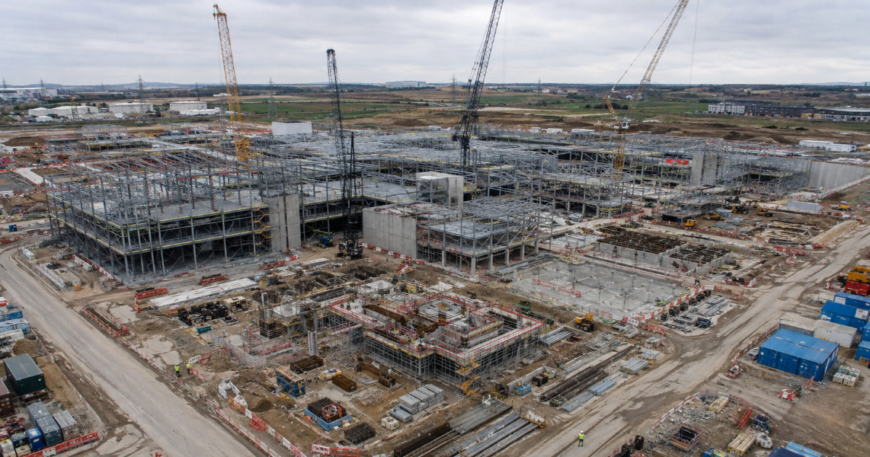
The challenge, as the industry is discovering, is that announcing investment and executing it are very different things. Standing up new facilities in areas that have historically lacked the utility infrastructure and specialised workforce required for high-tech GMP manufacturing requires capital delivery at an extraordinary scale. Regulatory approval for new manufacturing sites is a lengthy process. Skilled workforce pipelines take years to develop. The average pharmaceutical technology transfer, the systematic migration of manufacturing knowledge, process parameters and analytical methods from an existing to a new site, takes approximately 20 months, involves around 30 cross-functional experts and costs upwards of $5 million per product. A facility producing dozens of medicines could face years of sequential technology transfer campaigns before reaching full operational capacity.
The FDA has responded by launching a PreCheck Pilot programme offering phased technical guidance and pre-submission engagement for new domestic plants, prioritising sterile injectables, APIs and advanced biologics and gene therapy manufacturing across New York, New Jersey, Indiana and North Carolina. Even with that support, upstream equipment suppliers have not yet seen order flow commensurate with the scale of capex being announced, and no major new plant from this wave of announcements is expected to be operational before 2027 at the earliest.
Biologics Reach a Tipping Point
Whilst tariffs are reshaping where drugs are made, a parallel shift in what drugs are being made is creating its own manufacturing challenge. For the first time, biologics in development now outnumber small molecules, according to Citeline’s Pharma R&D Annual Review 2026, which describes the milestone as a tipping point for the industry. The pipeline is increasingly dominated by monoclonal antibodies, antibody-drug conjugates and, at the more complex end, cell and gene therapies. Each category carries manufacturing requirements fundamentally different from the small molecule pills that dominated twentieth-century pharma.
Compared to small molecules, biologics manufacturing requires more planning, investment and a multi-disciplinary workforce. Biologics are generally less robust, being both light and temperature-sensitive and more prone to shear forces, creating significant production challenges around stability, aggregation and purification. The surge in antibody-drug conjugates, which grew more than 30% over the 2025 to 2026 period, is particularly demanding. These molecules combine a targeting antibody with a cytotoxic payload, requiring highly specialised containment and handling infrastructure that most existing facilities were not designed to accommodate.
Pipelines are now filled with high-concentration biologics and next-generation antibodies that push the limits of current manufacturing processes, creating bottlenecks in stability, aggregation and purification that manufacturers are being forced to solve whilst simultaneously scaling output. Continuous bioprocessing, modular facilities and multi-column chromatography are emerging as solutions, but adoption at commercial scale remains limited.
Cell and Gene Therapy: Science Ahead of Its Supply Chain
Nowhere is the manufacturing challenge more acute than in cell and gene therapy. The science is advancing at pace: CAR-T therapies are now being trialled in autoimmune disease, gene editing tools are entering the clinic for rare inherited conditions, and epigenetic reprogramming therapies are approaching first-in-human studies. The manufacturing infrastructure needed to deliver these therapies at scale is struggling to keep up.
Cell and gene therapy faces a critical juncture in 2026, where the challenge is no longer the science but industrialisation. Developers are hitting a wall where process robustness, supply-chain variability and capacity specialisation collide. The cost of manufacturing cell therapies often exceeds $100,000 per patient and can be prohibitively expensive even in high-income countries. Distribution is challenged further by relatively short shelf life and complex cold-chain logistics.
For autologous therapies, in which a patient’s own cells must be extracted, engineered and returned, every batch is unique. That is not a scalable model at the volumes needed to treat large patient populations. The solutions being pursued are automation, standardisation and a shift towards allogeneic platforms, where cells from a single donor can be processed into treatments for multiple patients. The field is moving beyond a narrow focus on single therapeutic modalities and towards broader manufacturing considerations that support commercial deployment, with developers increasingly assessing which modalities are best suited to particular biological and manufacturing challenges.
The CDMO Squeeze
Cutting across all of these pressures is a capacity crunch in contract development and manufacturing. CDMOs are caught between surging demand and the long lead times required to build and validate new capacity. Specialised unit operations, including containment work for highly potent APIs, are becoming a particular bottleneck. For smaller biotechs bringing novel therapies to the clinic, access to qualified manufacturing capacity has become a strategic constraint that influences not just operations but also the ability to raise capital.
CDMOs are simultaneously being pulled in new directions, moving beyond traditional large-scale antibody production to offer capabilities in cell and gene therapies, viral vectors and specialised fill-finish services, with the cell and gene therapy segment anticipated to grow at the fastest rate between 2026 and 2033. Building those capabilities requires investment, expertise and regulatory validation that takes years to accumulate.
A Structural Reset, Not a Temporary Disruption
What is happening in pharmaceutical manufacturing in 2026 is not a response to a single policy shock or a temporary market pressure. It is a structural reset driven by the convergence of geopolitical risk, a generational shift in the medicines being developed and accumulated underinvestment in manufacturing infrastructure for advanced therapies.
With the Section 232 tariffs now live for the industry’s largest manufacturers and generic drug timelines set through to 2029, the commercial incentives to build domestic US capacity have never been clearer or more immediate. Whether the $480 billion in announced investment translates into functional capacity on the timelines promised, and whether the industry can genuinely industrialise cell and gene therapy production at accessible cost, are the two manufacturing questions on which the next decade of medicine will turn.
The science is running ahead of the factories. Closing that gap is now one of the most consequential challenges in life sciences.
Sources: White House Proclamation 11020, 2 April 2026; President Trump Truth Social announcement, 21 July 2026; Holland and Knight; Freshfields; Crowell and Moring; International Trade Insights; DCAT Value Chain Insights; Pharmaceutical Commerce; PharmExec; Eli Lilly press release, 26 February 2025; Citeline Pharma R&D Annual Review 2026; BioPharm International; BioPharma Dive; Clinical Leader; Think Global Health; Forma Life Sciences; IntuitionLabs.