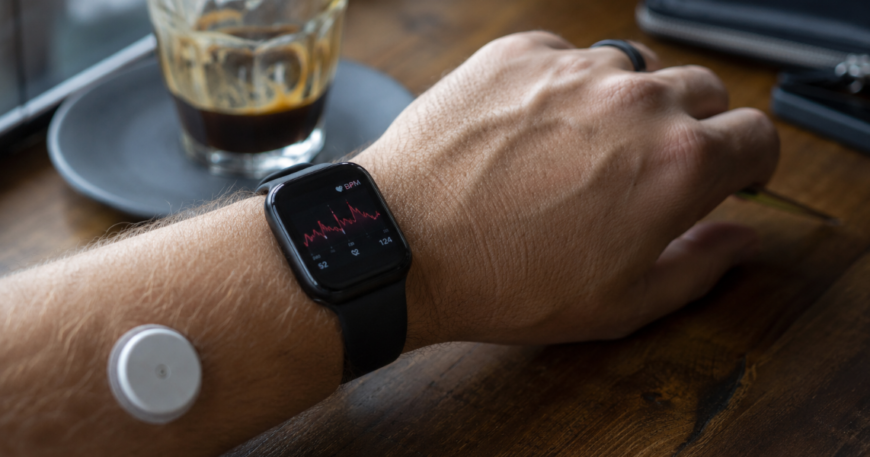
Smartwatches are detecting heart arrhythmias. Glucose sensors are being worn by people without diabetes. Regulators on both sides of the Atlantic are scrambling to keep pace. The line between wellness gadget and regulated medical device has never been less clear.
Not long ago, a wearable health device meant a pedometer clipped to a waistband. Today, a consumer can walk out of an Apple Store with a watch capable of generating a single-lead electrocardiogram, detecting atrial fibrillation and measuring blood oxygen saturation. They can order a continuous glucose monitor online and wear it without a prescription. The hardware has outpaced the regulatory frameworks designed to govern it, the clinical evidence base needed to validate it and, in many cases, the clinical workflows equipped to act on the data it generates.
That gap is now one of the most consequential questions in medtech.
A Market Running Ahead of the Rules
The numbers are striking. The global wearable medical devices market is projected to grow from $117 billion in 2026 to more than $505 billion by 2034, exhibiting a compound annual growth rate of 20%. Consumer-grade devices, including fitness bands, smartwatches and smart clothing, currently account for the largest share of that market, driven by demand that is outpacing clinical validation at every turn.
The convergence of consumer appeal and clinical function is not accidental. Device makers have deliberately engineered products that sit at the intersection of lifestyle and medicine. The Apple Watch, cleared by the FDA to detect irregular heart rhythms, is also marketed as a fitness tracker and sleep monitor. Continuous glucose monitors, originally developed for people managing insulin-dependent diabetes, are now sold over the counter to the general population. The commercial logic is clear. The clinical logic is more complicated.
The Atrial Fibrillation Question
Cardiac monitoring is perhaps the most clinically advanced use case for consumer wearables. Atrial fibrillation, the most common heart arrhythmia, is a leading cause of stroke and frequently goes undetected because episodes can be brief, intermittent and symptom-free. The appeal of a wearable that monitors continuously, rather than capturing a snapshot during a clinic visit, is straightforward.
The Apple Watch remains the most extensively studied device in this space, with the largest body of clinical evidence supporting its use in both research and real-world settings. A randomised controlled trial published in the Journal of the American College of Cardiology in early 2026 found that smartwatch-based atrial fibrillation screening using photoplethysmography and single-lead ECG functions enhanced the detection rate of new-onset atrial fibrillation compared with standard care in patients at elevated stroke risk, providing a scalable model for integrating digital screening into routine cardiology practice.
That is meaningful clinical evidence. But the same paper noted that whilst the trial establishes diagnostic benefit, the clinical impact of treating wearable-detected atrial fibrillation in this population remains to be demonstrated. Detection and improved outcomes are not automatically the same thing. A positive notification triggers anxiety, further testing and clinical decisions. Whether that chain of events ultimately helps the patient depends on the quality of the pathway that follows the alert, something a wristband cannot control.
Glucose Monitoring for the General Population
If cardiac wearables are ahead of clinical consensus, consumer glucose monitoring is further still. Since the FDA approved the first over-the-counter continuous glucose monitors, they have become a growing wellness trend among people without diabetes, with users drawn to claims that tracking glucose levels can help them lose weight, improve metabolic health and prevent disease. Public health researchers at Johns Hopkins have noted bluntly that whilst the devices have been transformative for people with diabetes, there is little evidence of benefits for people without the condition.
A systematic review published in January 2026 in the European Journal of Medical Research found that CGM use in non-diabetic populations may improve mean blood glucose and enhance intervention adherence, although evidence regarding its effects on measurement accuracy and glycaemic variability remains limited.
That limited evidence base has not slowed commercial uptake. Glucose monitoring has become a fixture of biohacking culture and, increasingly, of mainstream wellness. The risks are not trivial. Devices calibrated for diabetic ranges may produce misleading readings in metabolically healthy individuals. Anxiety triggered by glucose fluctuations that are clinically normal can drive unnecessary dietary restriction or medical consultations. The willingness of consumers to act on data generated by a device that was not designed with them in mind is a public health concern that neither industry nor regulators have fully addressed.
Regulators Respond, at Different Speeds
The regulatory response has been notable in 2026, and it points in two different directions.
In the United States, the FDA in January moved to ease oversight of consumer wearables and digital health tools. The FDA clarified that many low-risk AI-enabled software tools and consumer wearables fall outside medical device regulation when clinicians can independently review the device’s clinical recommendations, whilst high-risk digital health products that diagnose or treat disease remain fully subject to medical device oversight. The updated guidance reflects a risk-based approach intended to encourage innovation whilst preserving safeguards for higher-risk applications. Critics have raised concerns that the practical boundary between “low risk” and “diagnostic” is difficult to draw cleanly in an era of AI-powered analysis.
In the United Kingdom, the MHRA is taking a more cautious path. In May 2026, the agency published draft pre-market regulatory requirements for medical devices under the Medical Devices (Amendment) Regulations 2026, which bring forward patient-centred and proportionate regulatory requirements to prioritise patient safety and access to innovative medical technologies. The draft is currently open for consultation with industry, and the regulation is expected to come into force in mid-2027. The MHRA has also been developing specific guidance on digital mental health technologies and software as a medical device, recognising that apps and wearables targeting psychological as well as physical health require their own regulatory framework.
What the NHS Needs From Wearable Data
For wearable technology to deliver clinical value, the data it generates has to connect meaningfully with healthcare systems. That is currently one of the weakest links in the chain. More than 35% of telehealth service providers now utilise wearable-generated data to support personalised treatment plans and clinical decision-making. But integration with electronic health records, clinical decision workflows and reimbursement systems remains inconsistent and often absent.
The NHS, under pressure on capacity and increasingly committed to a shift towards prevention and early diagnosis, has a structural interest in consumer wearables that genuinely work. Remote monitoring of patients with chronic conditions, post-discharge monitoring following hospital admission and population-level screening for conditions such as atrial fibrillation all represent plausible use cases in which validated wearables could reduce clinical burden. The barrier is not the technology. It is the evidence, the integration and the clinical governance frameworks needed to act safely on what the devices detect.
The Burden of Proof Has Not Moved
The fundamental challenge is that consumer demand and commercial deployment have outrun the evidentiary standards that medicine requires. A device can reach millions of wrists before a single randomised trial has demonstrated that its outputs improve patient outcomes. By the time the clinical evidence catches up, behavioural norms, commercial expectations and regulatory precedents have already been set.
“The RAS revolution is here,” was how one oncologist described a recent cancer breakthrough at ASCO. No one is likely to say the same of wearable health tech. The revolution in consumer health hardware is already underway. The clinical credibility it needs to justify its medical ambitions is still being built, one trial at a time.
Regulators, clinicians and industry all have a role in closing that gap. The question is whether they can do so before the consumer market makes that task irrelevant.
Sources include the Journal of the American College of Cardiology, the European Journal of Medical Research, the Johns Hopkins Bloomberg School of Public Health, the FDA, the MHRA, Fortune Business Insights and the American Society of Clinical Oncology.