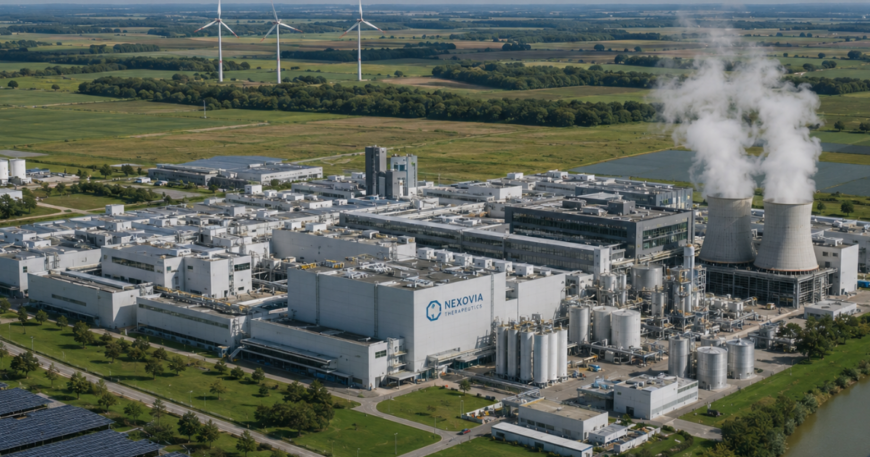
The life sciences industry emits more than the aviation sector. With net zero deadlines approaching and regulators tightening disclosure rules, the gap between promise and progress has never been more scrutinised.
The pharmaceutical industry has long positioned itself as a force for human good. Its products extend life, relieve suffering and prevent disease. Yet the sector carries an environmental burden that sits uncomfortably alongside that reputation. The healthcare industry contributes an estimated 4.4% of total global emissions annually, more than the automotive industry. That figure, cited repeatedly in industry and academic literature, has become something of a rallying call for those pushing life sciences companies to clean up their act. The trouble is that progress, by most measures, is falling well short of where it needs to be.
A Footprint That Keeps Growing
The scale of the problem is not disputed. Global pharmaceutical greenhouse gas emissions have increased by 77% since 1995, representing a near-doubling of the industry’s footprint over three decades, during a period of significant sustainability awareness and commitment. Rising demand for medicines, expanding global supply chains and energy-intensive manufacturing have all driven that trajectory upward, even as public commitments to decarbonisation have multiplied.
The pharma industry has been estimated to generate around 52 megatons of CO2 equivalent annually, with analysis suggesting it is far more emissions-intensive than the automotive sector. To put that in context, if healthcare were a country, its carbon footprint would place it among the world’s five largest emitters.
Most of the emissions sit in what the industry calls Scope 3: the indirect outputs generated across supply chains, by suppliers, logistics providers and contract manufacturers. Scope 3 emissions account for between 80% and 90% of the pharmaceutical sector’s total climate impact. This is the category hardest to control, hardest to measure and, critically, the one in which the least progress has been made.
The Supply Chain Problem
For pharmaceutical companies, emissions from active pharmaceutical ingredient (API) synthesis, raw material sourcing and outsourced manufacturing are often the largest source of carbon emissions. Scope 3 emissions can be difficult to manage because they occur outside the direct control of pharmaceutical companies.
This dependency on complex, globally dispersed supply chains creates a structural challenge. A company can decarbonise its own buildings, switch to renewable electricity and electrify its vehicle fleet, and still account for only a fraction of its true footprint. The bulk sits with the suppliers, and gaining reliable emissions data from hundreds of upstream partners, many operating across different regulatory regimes and reporting standards, remains a serious operational difficulty.
Achieving transparency and standardised reporting of Scope 3 emissions is a particular challenge for the bio/pharmaceutical industry, which has complex manufacturing and supply chains. Customers increasingly expect high-quality, comparable, auditable emission data. Emission data aligned with global frameworks such as the Greenhouse Gas Protocol and the Science-Based Targets initiative for suppliers has become a kind of licence to operate.
That pressure is being formalised through regulation. Scope 3 reporting under the Corporate Sustainability Reporting Directive is already mandatory for many European companies, with further expansion expected through 2025 and 2026. Companies that have relied on rough spend-based estimates to approximate their supply chain footprint will need to shift to verifiable, activity-based data. That is a significant operational lift for most.
Ambition Versus Trajectory
The gap between stated ambition and actual trajectory is perhaps the most troubling aspect of the current picture. Many pharmaceutical companies have set ambitious, science-based decarbonisation goals, but only 20% of life sciences companies are on track to achieve net zero by 2050.
Individual companies tell a mixed story. AstraZeneca has reported it is on track to achieve a 98% reduction in operational emissions by 2026, and Sanofi has said it is on track to be carbon neutral by 2030. These are meaningful steps. But operational emissions, Scope 1 and 2 combined, represent a fraction of total impact.
GSK illustrates the challenge clearly. The London-based company has made some of the most ambitious climate commitments in the sector, yet by 2023, the last year for which it published full data, GSK’s emissions had fallen by only 12%, half the pace it needs to reach its 2030 target. Meanwhile, the Science-Based Targets initiative continues to validate company pledges, but validation of a target is not the same as delivery against it.
According to a 2024 Global Biopharma Sustainability Review, 69% of pharmaceutical leaders identify limited value chain collaboration as the primary barrier to sustainability progress. The problem, in other words, is not primarily a lack of technology or investment. It is a structural failure of coordination across interconnected commercial relationships.
Where Momentum Is Building
The picture is not entirely discouraging. Several practical levers are gaining traction.
The shift to lower-emission inhalers represents one of the more concrete examples of product-level change. Metered-dose inhalers contain hydrofluorocarbons, potent greenhouse gases. For GSK, a leader in respiratory medicine, 45% of all its emissions comes from metered-dose inhalers, and the company is developing a lower-emission propellant that could reduce inhaler greenhouse gas emissions by 90%. If that transition happens at scale across the sector, the impact would be significant.
Green chemistry is also gaining ground in manufacturing. The ACS Green Chemistry Institute Pharmaceutical Roundtable has drawn together major companies to share methods for reducing waste and cutting energy use in active pharmaceutical ingredient synthesis. The industry has adopted green chemistry principles in the production of life-saving medications, ensuring that manufacturing processes are both commercially viable and have minimal environmental impact.
Supply chain collaboration programmes, such as the Energize initiative involving GSK, Novartis and Schneider Electric, are attempting to help pharmaceutical suppliers transition to renewable energy by providing technical education and removing market barriers. Tools that integrate procurement, logistics and supplier information are helping teams identify emissions hotspots and direct investment to areas of highest impact, with the goal of moving sustainability data out of annual cycles and into real-time decision-making.
Why This Matters Beyond the Environment
There is a certain irony in an industry dedicated to human health being a significant driver of the conditions that worsen it. Climate change drives heat-related illness, worsens air quality, expands the geographic range of infectious diseases and places acute strain on health systems. In addition to carbon emissions, pharmaceutical and healthcare organisations are increasingly exposed to the physical impacts of climate change, including extreme temperatures, flood risks and water scarcity, threats that can disrupt both manufacturing sites and patient care.
Regulatory and commercial pressure is also intensifying. Institutional investors are tightening ESG requirements. Procurement decisions by large public health systems, including the NHS, increasingly factor in supplier sustainability credentials. Companies that fail to make credible progress on emissions face reputational, regulatory and eventually financial consequences that are only likely to grow.
The 2030 Reckoning
The period between now and 2030 is critical. Many of the sector’s headline commitments, including pledges to halve operational emissions and achieve carbon neutrality for direct operations, have 2030 as a target date. With four years remaining, the current rate of progress leaves a substantial deficit in most organisations.
A clear theme has emerged from industry gatherings: collaboration is the catalyst. When manufacturers, CDMOs, suppliers, regulators and health systems work in step, change happens faster and at far greater scale. The rapid transition to lower-GWP inhalers has demonstrated what coordinated effort across a supply chain can deliver, not over decades, but within years.
The life sciences industry has an unparalleled capacity to solve complex problems when the incentives and the structures align. The science of decarbonisation is not the bottleneck. The will, the coordination and the accountability mechanisms are. Whether the sector can close the gap between its commitments and its carbon trajectory before the 2030 reckoning arrives is one of the defining questions now facing its leadership.
Sources include Drug Discovery Trends, Frontiers in Immunology, DCAT Value Chain Insights, Pharma Source Global, Life Science Integrates, PSCI and the Pharmaceutical Supply Chain Initiative.