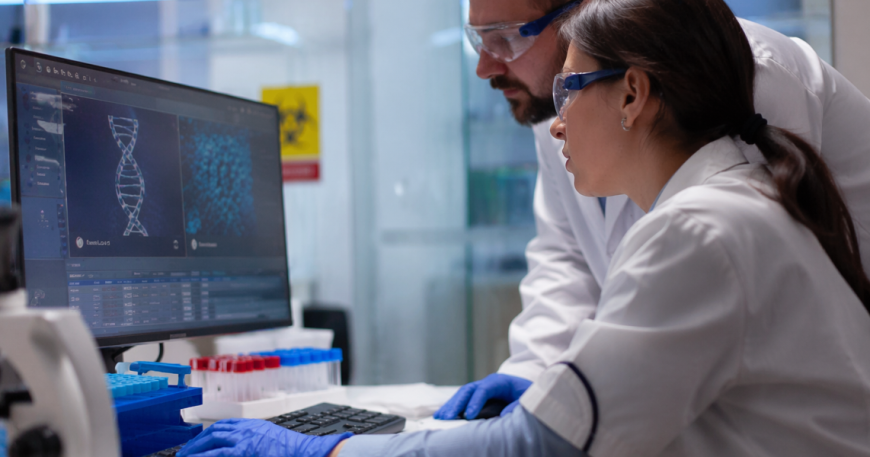
The concept of digital twins, long associated with engineering and manufacturing, is beginning to find meaningful application within healthcare. A digital twin refers to a virtual model that accurately reflects a physical object or system. In a medical context, this means creating a detailed digital representation of a patient’s body, organs, or biological processes. As this technology develops, it is opening up new possibilities for personalised treatment, predictive medicine, and more precise clinical decision-making.
Traditional Models
Traditionally, healthcare has relied on generalised models of disease and treatment. While these approaches have led to major advancements, they are inherently limited by their inability to fully account for individual variation. Patients with the same diagnosis can respond very differently to identical treatments, influenced by factors such as genetics, lifestyle, and underlying conditions. Digital twins aim to address this limitation by offering a highly individualised model that can simulate how a specific patient might respond to different interventions.
At the core of this innovation is the integration of large and diverse datasets. Medical imaging, genetic information, electronic health records, and real-time physiological data can all contribute to building a comprehensive digital profile. Advanced computational techniques are then used to create a dynamic model that evolves alongside the patient. This allows clinicians and researchers to test potential treatments in a virtual environment before applying them in real life, reducing uncertainty and potentially improving outcomes.
Promising Applications
One of the most promising applications of digital twins is in cardiovascular medicine. By creating a virtual model of a patient’s heart, clinicians can simulate blood flow, assess the impact of structural abnormalities, and predict how the organ might respond to surgical procedures or medications. This level of precision could significantly improve the planning of complex interventions, reducing risks and enhancing recovery.
Similarly, in oncology, digital twins could play a role in tailoring cancer treatments. Tumours are highly complex and can behave differently even within the same type of cancer. A digital twin of a tumour could allow researchers to simulate how it might respond to various therapies, helping to identify the most effective approach for each patient. This could be particularly valuable in reducing the trial-and-error nature of some cancer treatments, where patients are exposed to multiple therapies before finding one that works.
Challenges Continue
Despite its potential, the adoption of digital twin technology in healthcare is not without challenges. One of the primary concerns is data quality and integration. Building an accurate digital twin requires vast amounts of reliable data, often sourced from different systems that may not be fully compatible. Ensuring that this data is consistent, up to date, and securely managed is a significant hurdle.
There are also questions around computational complexity. Creating and maintaining a digital twin is resource-intensive, requiring advanced infrastructure and expertise. For many healthcare systems, particularly those already under pressure, the cost and technical demands may act as a barrier to widespread implementation. This raises concerns about whether such innovations could exacerbate existing inequalities in access to advanced medical care.
Ethics remain important
Ethical considerations are equally important. The use of highly detailed personal data necessitates robust safeguards to protect patient privacy. There is also the question of accountability. If a treatment decision is influenced by a digital model, determining responsibility in the event of an adverse outcome becomes more complex. Clear regulatory frameworks will be essential to ensure that the technology is used safely and responsibly.
Another important aspect is the role of clinicians. While digital twins offer powerful insights, they are not a replacement for medical expertise. Instead, they should be viewed as a tool that supports decision-making. Ensuring that healthcare professionals are properly trained to interpret and use these models will be critical to their success. Without this, there is a risk that the technology could be misunderstood or misapplied.
Looking ahead, the development of digital twins in healthcare is likely to accelerate as computational capabilities continue to improve and data becomes more accessible. Collaboration between technology companies, healthcare providers, and regulatory bodies will be essential in driving this progress. Standardisation of data formats and modelling approaches could also help to overcome some of the current barriers.
What about in the long-term?
In the longer term, digital twins have the potential to move healthcare towards a more predictive and preventative model. Instead of reacting to illness, clinicians could use digital models to identify risks before they develop into serious conditions. This shift could not only improve patient outcomes but also reduce the overall burden on healthcare systems.
In conclusion, digital twins represent a significant step towards truly personalised medicine. While there are clear challenges to overcome, the potential benefits are substantial. By enabling more precise, data-driven decision-making, this technology could reshape how diseases are understood and treated. As research and development continue, digital twins may become an integral part of the healthcare landscape, offering a more tailored and proactive approach to patient care.