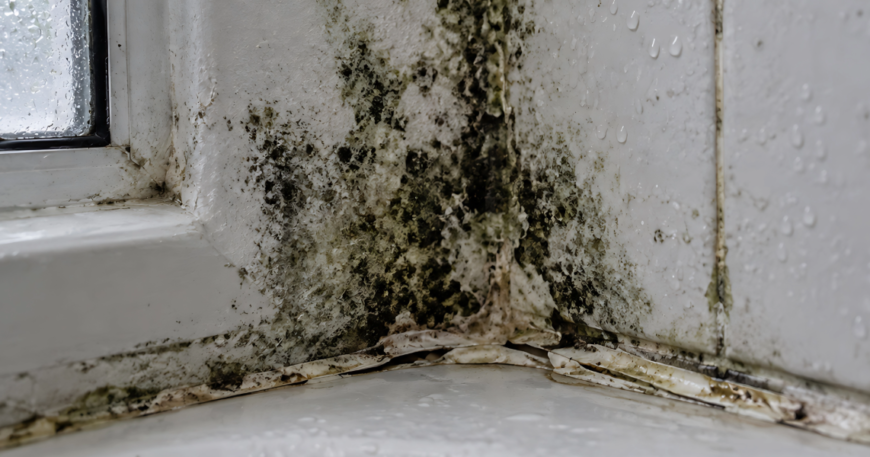
Damp and mould in British homes is a familiar complaint, and most research on it works the same way, a survey taken at one point in time, comparing households with the problem against households without it. A study published in 2026 by City St George’s, University of London, working with Harvard University and the Born in Bradford research project, did something different. It followed the same children for years rather than surveying different households once, and the finding that stands out is not simply that damp and mould are harmful, but that where the mould sits inside a home matters more than whether it is present at all. The study lands alongside the first year of Awaab’s Law and a national report quantifying just how unevenly the problem is distributed, together making the case for why housing has become as much a regulatory issue as a health one.
A Study That Followed Children Rather Than Surveying Them Once
The research tracked more than 2,500 Bradford children from early childhood, ages 3 to 5, into later childhood, ages 7 to 11, comparing conditions in their homes against respiratory symptoms recorded at each stage. Just under a quarter, 23 per cent, of the children were living in homes with damp or mould in early childhood. Bedroom mould specifically was linked to significantly higher odds of wheeze symptoms, and children who had lived in a damp or mouldy home were one and a half times more likely to develop new hay fever by ages 7 to 11 than children who had not. Where the mould was specifically in the child’s bedroom rather than elsewhere in the home, that likelihood rose again, to nearly twice as high.
Dr Sierra Clark of City St George’s School of Health and Medical Sciences, who led the study, said the findings point to a specific and practical conclusion: “improving housing conditions, particularly by reducing mould in children’s bedrooms, could have important benefits.” Rosie McEachan, Director of Born in Bradford, added that damp and mould disproportionately affect lower income families, a pattern the wider national data below bears out. Following the same children over time, rather than comparing different households at a single moment, lets researchers separate a lasting effect from a coincidence, and here it did more than that. It pointed to a single room as the place where the harm concentrates, a more specific and actionable finding than the general advice to keep a home dry that this kind of research has tended to produce in the past.
The Law Named After a Two Year Old
The regulatory backdrop to that finding is Awaab’s Law, which came into force for social landlords in England on 27 October 2025. It is named after Awaab Ishak, a two year old boy who died in 2020 from a severe respiratory condition caused by prolonged exposure to mould in his family’s rented home, after his parents had repeatedly complained to their landlord over three years without the problem being addressed.
The law sets fixed timeframes rather than general expectations. Social landlords must investigate a significant damp or mould hazard within 10 working days of becoming aware of it, complete the necessary safety work within 5 working days of that investigation concluding, and begin supplementary work to stop the problem recurring within the same 5 working day window. An emergency hazard must be investigated and made safe within 24 hours. Landlords must also give tenants a written summary of their findings within 3 working days, and arrange suitable alternative accommodation if repairs cannot be completed within the required timeframes. Set against that structure, research pointing specifically to the bedroom as the room where harm concentrates most is not just diagnostically interesting, it gives landlords and inspectors a clearer sense of where to prioritise when a home has more than one affected room and a limited number of working days to act in.
Who Actually Lives With It
The national picture explains why this has become such a pressing issue. The House of Commons Library puts the number of English homes with damp problems at 904,000 as of 2021, and the number of households living with excess cold hazards at 653,000 as of 2019, using English Housing Survey data. Damp is markedly more common in the private rented sector, at 11 per cent of homes, than in social rented housing at 4 per cent or owner-occupied homes at 2 per cent. The same briefing puts the NHS cost of treating illnesses linked to cold and damp housing at £1.4 billion a year, rising to £15.4 billion when wider societal costs are included.
A separate report published in December 2025 by the Centre for Ageing Better, working with the Health Equals campaign, adds detail on who is most affected. Among homes with condensation, damp or mould, 42 per cent had at least one person with asthma or a weakened immune system, compared with 22 per cent of homes without the problem. The income gap was stark: 21 per cent of households earning £15,000 a year or less lived in a home with condensation, damp or mould, compared with 12 per cent of households earning £75,000 or more, and 35 per cent of the lower income group reported stress, anxiety or depression connected to their housing, against 19 per cent of the higher income group. The report also found that Black respondents living with symptoms of damp related illness were considerably more likely to have needed medical treatment than White respondents reporting the same symptoms, 76 per cent against 59 per cent.
What Comes After the Data
A second, related piece of research is already under way to test whether fixing the building itself changes these outcomes directly, rather than simply correlating with them. Born in Bradford’s Healthy Homes study, funded by the National Institute for Health Research, has recruited 384 households who are tenants of the housing association Incommunities, comparing homes receiving energy efficiency and damp related retrofitting work in 2026 against a comparison group whose homes will be upgraded later. Recruitment finished in autumn 2025 and results are not yet available.
Taken together, the three pieces of work sit in an unusually tight sequence for this kind of issue. The cohort study identifies where the harm concentrates within a home, the law sets out exactly how quickly a landlord must act once a problem is found, and the trial now under way will test whether physically upgrading a home is what actually improves a child’s health, rather than simply being associated with better health among people who could already afford a drier one. Not every public health problem gets research, regulation and an intervention trial arriving in the same rough window. This one has, and a two year old whose death prompted the legal deadlines is the reason any of it is being acted on this quickly.
Sources: City St George’s, University of London; Born in Bradford; GOV.UK (Awaab’s Law guidance for social landlords); House of Commons Library; Centre for Ageing Better and Health Equals.